These pumpkin cheesecake snickerdoodle cookies bake up with crisp, cinnamon-sugar edges, a soft pumpkin-spiced center, and a tangy cream cheese filling that turns each bite into something special. The outside crackles just a little as you bite in, then you hit that creamy middle and the whole cookie changes character. They look like a classic snickerdoodle from the outside, but the filling makes them feel bakery-level without being fussy.
The trick is keeping the pumpkin dough dry enough to hold its shape. Blotting the pumpkin before it goes into the bowl matters more than it sounds like it should, because extra moisture can make the cookies spread and weaken the seal around the filling. Freezing the cream cheese mixture into small balls gives you a clean center instead of a melty swirl, and that little bit of patience pays off in the oven.
Below, I’ll walk through the one part that makes these cookies hold together and the small details that keep the filling from leaking. I’ve also included a few variations in case you want to make them a little more pumpkin-forward, dairy-free, or easier to store for later.
The filling stayed tucked inside and the cookies baked up soft in the middle with those chewy cinnamon-sugar edges. Freezing the cream cheese balls first made assembly much easier.
Pumpkin Cheesecake Snickerdoodle Cookies are worth pinning for the soft centers, cinnamon-sugar crust, and tangy cheesecake surprise inside.
The Reason These Cookies Hold Their Cheesecake Center
The part that trips people up is the filling, not the dough. If the cream cheese center is too soft, it melts into the cookie and disappears. If the dough is too wet, it won’t seal cleanly and you’ll get leaks on the pan instead of a tidy pocket of cheesecake.
Freezing the filling into teaspoon-sized balls changes the whole process. You’re not trying to spoon soft filling into sticky dough, which is where most stuffed cookies fall apart. You’re wrapping a firm center in a flexible dough, then rolling the whole thing in sugar so the outside sets up with that classic snickerdoodle crackle.
- Blotted pumpkin — This keeps the dough from getting loose and cakey. Pat it dry with paper towels until it looks more like a thick paste than puree.
- Cream of tartar — It’s what gives the cookie that snickerdoodle tang and helps the texture stay tender instead of turning into a standard pumpkin cookie.
- Frozen filling — Don’t skip the freeze. Even 30 minutes gives the center enough structure to survive shaping and baking.
What Each Ingredient Is Doing In These Pumpkin Cheesecake Snickerdoodles

- Cream cheese — Use full-fat cream cheese for the filling. Low-fat versions hold more water and can turn the center loose instead of creamy and defined.
- Powdered sugar — This sweetens the filling without grit and helps it freeze into clean little balls. Granulated sugar won’t give the same smooth texture.
- Butter — Butter carries the cinnamon-sugar coating and gives the cookie its tender edges. It should be softened, not melted, or the dough will spread.
- Pumpkin puree — The pumpkin adds color and flavor, but only if it’s dry enough. Blotting it is the difference between a cookie that holds shape and one that bakes up puffy and fragile.
- Cream of tartar and baking soda — This is the snickerdoodle backbone. Together they create lift and that subtle tang you expect in a true snickerdoodle.
- Flour — The dough needs enough structure to wrap around the filling without tearing. Spoon and level it so you don’t accidentally pack in too much.
Shaping the Dough So the Filling Stays Inside
Make the filling first
Mix the cream cheese, powdered sugar, pumpkin pie spice, and vanilla until smooth, then scoop it into 24 teaspoon-sized portions and freeze them. They don’t need to be rock hard, but they should be firm enough to pick up without smearing. If the filling is soft when it goes into the dough, it will squish out while you seal the cookie.
Build a dry, workable pumpkin dough
Beat the butter and sugar until light, then mix in the blotted pumpkin, eggs, and vanilla. Add the dry ingredients and stop mixing as soon as the flour disappears. Overmixing tightens the dough and makes it harder to shape, while under-mixing leaves flour streaks that show up as dry patches after baking.
Wrap and seal with no seams showing
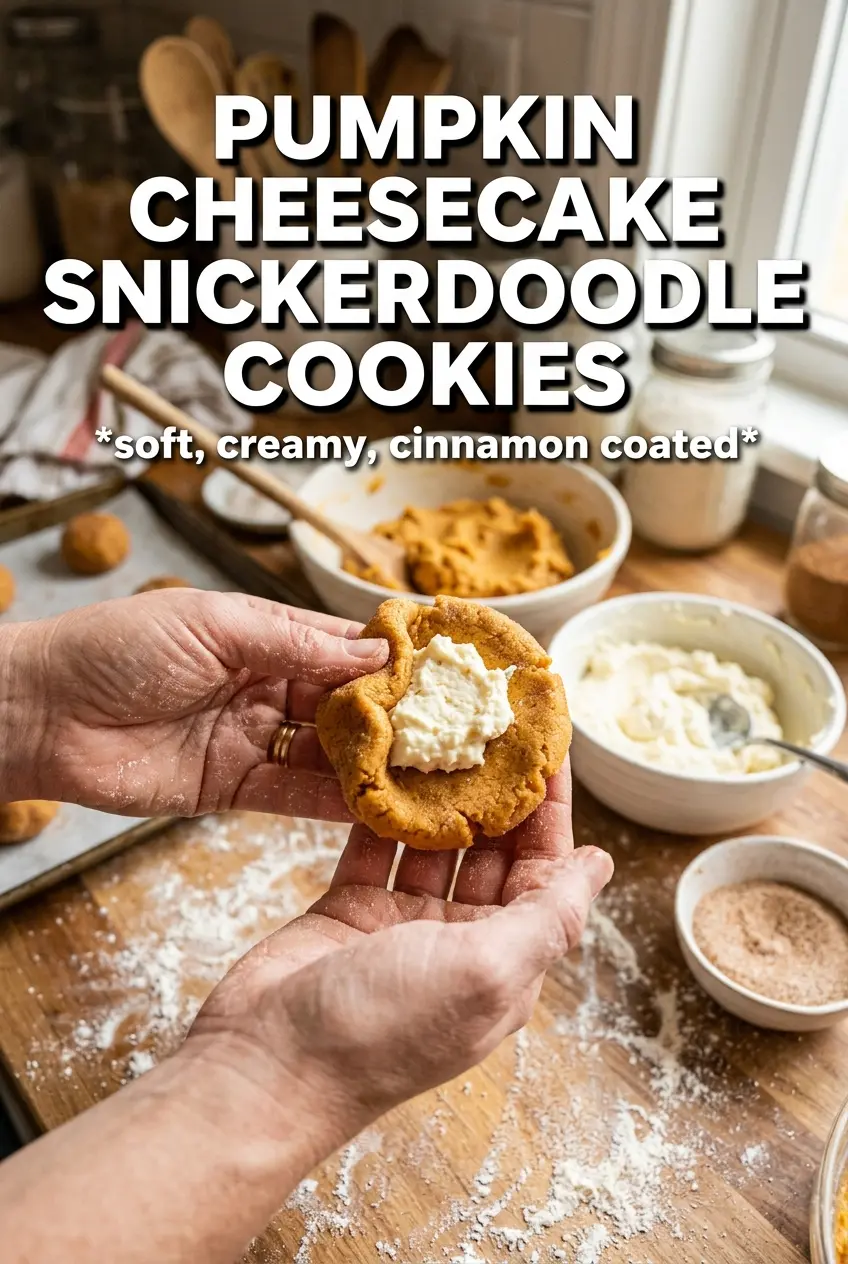
Scoop the dough into 2-tablespoon portions, flatten each one in your palm, and place a frozen filling ball in the center. Bring the dough up and around it, pinching the seam closed before you roll it gently between your hands. If the seam stays visible, it’s the first place the cookie will split open in the oven.
Roll generously and bake just until set
Coat each filled dough ball in the cinnamon sugar mixture before baking at 375°F for 11 to 13 minutes. The cookies should look puffed, with edges set and the centers still a little soft. Pulling them when they still look slightly underdone is how you keep the filling creamy instead of overbaking the whole cookie into a dry mound.
Make Them a Little More Pumpkin-Forward
Add a touch more pumpkin pie spice to the dough or the rolling sugar if you want the pumpkin to read louder. Don’t add extra pumpkin puree unless you’re also willing to add more flour, because the dough will loosen and the cookies can spread.
Dairy-Free Version
Use plant-based butter and a dairy-free cream cheese that’s sold in block form, not a whipped tub. The texture will be a little softer, so freeze the filling longer and chill the shaped dough for 10 to 15 minutes before baking.
Gluten-Free Swap
A cup-for-cup gluten-free flour blend works best here. The cookies may spread a touch more, so keep the dough portions even and don’t flatten them too thin before filling.
Storage and Reheating
- Refrigerator: Store in an airtight container for up to 5 days. The filling stays creamy, and the cookies soften a bit as they sit.
- Freezer: Freeze baked cookies in a single layer, then transfer to a freezer bag for up to 2 months. You can also freeze the filled unbaked dough balls and bake from frozen with 1 to 2 extra minutes.
- Reheating: Warm baked cookies for 8 to 10 seconds in the microwave just to take the chill off. Too much heat melts the filling and makes the cookie greasy instead of soft.
Questions I Get Asked About This Recipe
Pumpkin Cheesecake Snickerdoodle Cookies
Ingredients
Equipment
Method
- Freeze the cream cheese filling balls for 30 minutes until firm.
- Keep the frozen balls in the freezer while you prepare the cookie dough so they hold their shape when wrapped.
- Beat the butter and sugar together until smooth, then add the blotted pumpkin, eggs, and vanilla and mix until combined.
- Fold in the flour mixture (flour, cream of tartar, baking soda, cinnamon, nutmeg, and salt) just until no dry streaks remain.
- Scoop 2-tablespoon portions of dough, flatten them, and place one frozen cream cheese ball in the center.
- Wrap the dough around the filling and seal the edges completely to prevent leaks.
- Roll the wrapped cookies generously in the cinnamon sugar mixture (sugar, cinnamon, and pumpkin pie spice) so they look crinkled after baking.
- Bake on a sheet pan at 375°F for 11-13 minutes, until the cookies look set around the edges.
- Cool completely so the filling firms as it cools, then serve.