Caramelized pumpkin wedges over cool, garlicky yogurt make a side dish that eats like something far more thoughtful than a tray of roasted vegetables. The pumpkin gets deep edges and a soft, almost buttery center, then lands on a tangy herb sauce that keeps every bite bright. Toasted pine nuts add the one thing this dish absolutely needs: a crisp, nutty finish that keeps the texture from going flat.
The trick is in the roast. Pumpkin and butternut both need enough heat to brown before they collapse, so the oven has to be hot and the wedges need space. The cumin, coriander, smoked paprika, and cayenne don’t just season the squash; they help it taste roasted, not steamed. Then the yogurt sauce acts like a cold, sharp counterpoint, which is why the whole dish feels balanced instead of heavy.
Below, I’ve included the little details that matter most, from keeping the pumpkin wedges from turning soggy to the best way to layer the sauce and toppings so the platter looks as good as it tastes.
The pumpkin caramelized beautifully at the edges, and the yogurt sauce stayed thick enough to spread under it without getting watery. I used the pomegranate molasses at the end and it pulled everything together.
Save this roasted pumpkin with yogurt sauce and pine nuts for a side dish with caramelized edges, tangy yogurt, and a jeweled finish.
The Trick to Roasting Pumpkin Without Turning It Soft and Pale
Pumpkin and butternut squash need direct heat and room to breathe. If the wedges are crowded, they steam in their own moisture and stay dull instead of developing those browned edges that make the dish worth serving. A hot oven at 425F gives the surface enough energy to caramelize before the inside turns mushy.
Cut the wedges into a size that holds its shape, and keep the skin on if it’s thin and edible. The skin helps the pieces stay intact on the platter, especially once they’re tossed with the yogurt sauce underneath. The spices also work best when they coat the oil first, because that thin layer helps them bloom on the squash instead of clumping in spots.
What Each Ingredient Is Actually Doing in This Dish
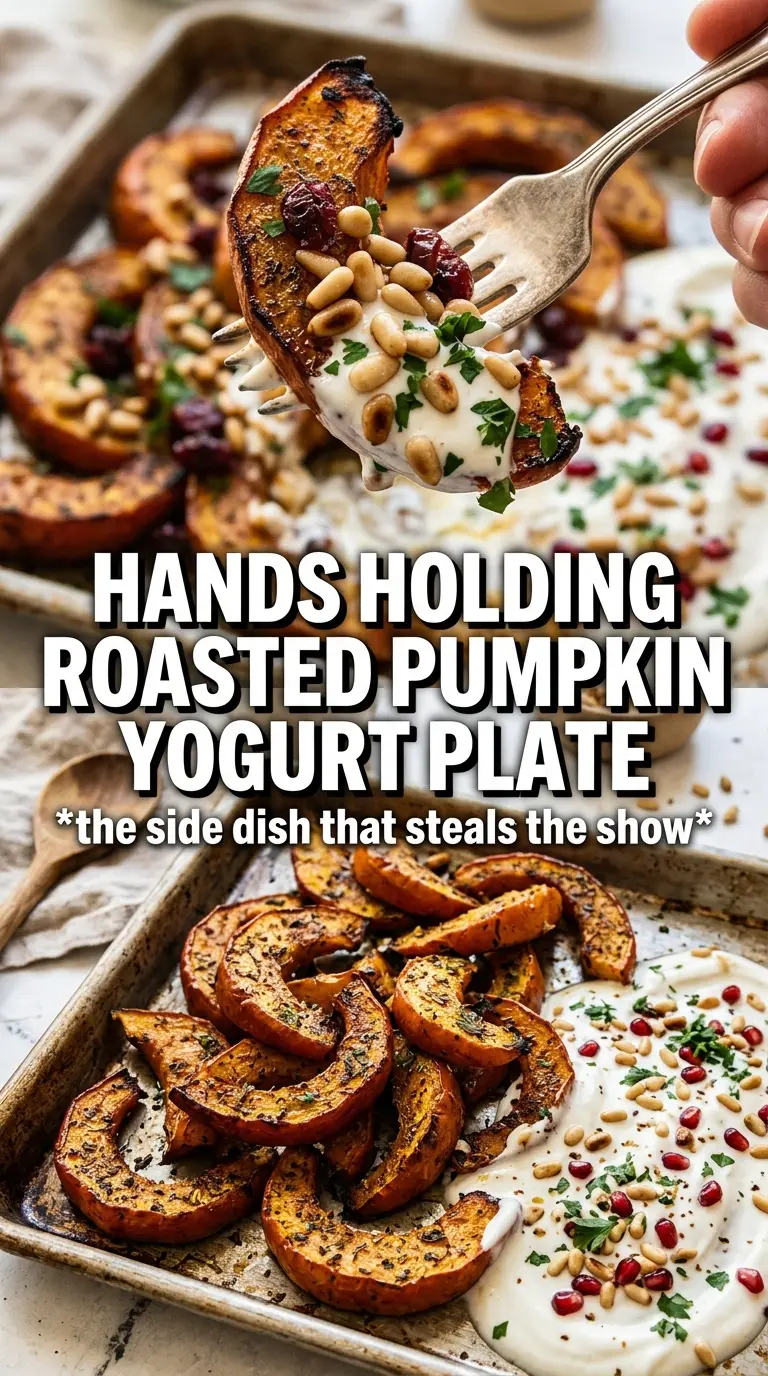
- Pumpkin or butternut squash — Use a firm, dense squash that roasts into defined wedges. Butternut is easier to find and usually sweeter, while pumpkin gives a slightly earthier finish. The key is cutting it evenly so everything softens at the same pace.
- Olive oil — This carries the spices and helps the squash brown. A good everyday olive oil is fine here; save the expensive finishing oil for the final drizzle if you want a cleaner, fruitier note.
- Cumin, coriander, smoked paprika, and cayenne — This blend gives the squash warmth, depth, and a little edge. Cumin and coriander bring the earthy base, smoked paprika adds color and a hint of smoke, and cayenne keeps the sweetness from reading flat. If you want less heat, cut the cayenne in half rather than removing it entirely.
- Greek yogurt — Full-fat Greek yogurt makes the sauce thick enough to spread under the squash without running everywhere. Thin yogurt turns watery once the lemon and garlic go in. If you need a dairy-free version, use a thick plain coconut yogurt with a neutral taste, but expect a softer tang.
- Garlic, lemon juice, and herbs — These are what keep the sauce bright and savory. Mince the garlic finely so it disappears into the yogurt instead of biting back. Fresh mint and parsley are the best herbs here because they stay clean and fresh against the roasted squash.
- Pine nuts, pomegranate seeds, and pomegranate molasses — Pine nuts add crunch, pomegranate seeds add juicy pops, and the molasses brings sweetness with acidity. Toast the pine nuts until pale gold, not dark brown, because they go from nutty to bitter fast. If you can’t find pomegranate molasses, a reduced balsamic glaze works in a pinch, though it tastes less bright and more syrupy.
Building the Platter in the Right Order
Roasting the Squash Until the Edges Color
Toss the wedges thoroughly so every surface gets coated in oil and spices, then spread them in a single layer on a sheet pan. Put the cut sides down where possible; that contact with the pan is what builds browning. If the pan is packed, the pumpkin softens before it colors, and you lose the roasted flavor that makes the dish stand out. Pull it from the oven when the edges look deep gold and the thickest part slides easily with a knife but still holds its shape.
Whisking the Yogurt Sauce Smooth
Stir the yogurt, garlic, lemon juice, herbs, and salt until it’s silky and even. The sauce should be thick enough to spread, not pour, because it needs to act as a base for the warm squash. If your yogurt seems loose, let it sit for a few minutes after mixing; the salt and lemon will tighten the texture slightly. Taste it now, before the pumpkin goes on, because the seasoning has to stand up to the sweetness of the squash.
Finishing With Crunch, Juice, and Shine
Spread the yogurt on a platter first, then arrange the warm pumpkin over it while the squash still carries a little heat. Add the pine nuts and pomegranate seeds at the end so they stay crisp and fresh. The final drizzle of pomegranate molasses should be light and ribboned, not heavy; too much makes the dish sticky and can drown the herbs. Fresh mint on top gives the whole platter a clean finish right before serving.
Three Ways to Adjust This Roasted Pumpkin for Your Table
Dairy-Free Version With Coconut Yogurt
Use a thick plain coconut yogurt in place of Greek yogurt. The texture stays creamy, but the sauce will taste a little softer and less sharp, so add the lemon gradually and don’t skip the salt. It’s the best swap when you still want a cool base under the squash.
Make It a Little More Hearty
Add cooked chickpeas to the tray for the last 10 to 12 minutes of roasting. They pick up the spices and give the dish more substance without changing the flavor direction. This works well when the pumpkin is serving as a light main instead of a side.
Nut-Free Topping Swap
Replace the pine nuts with toasted pumpkin seeds. You’ll keep the crunch, and the flavor stays in the same roasted, savory lane. Sunflower seeds work too, though they taste a little more rustic and less buttery.
Storage and Reheating
- Refrigerator: Store the roasted pumpkin and yogurt sauce separately for up to 3 days. The squash softens a bit in the fridge, but the flavor holds well.
- Freezer: The roasted pumpkin freezes decently, though the texture becomes softer after thawing. Don’t freeze the yogurt sauce; it tends to separate.
- Reheating: Warm the pumpkin in a 375F oven until heated through. Don’t microwave it if you want to keep the edges from going limp, and add the sauce only after reheating.
Questions I Get Asked About This Recipe
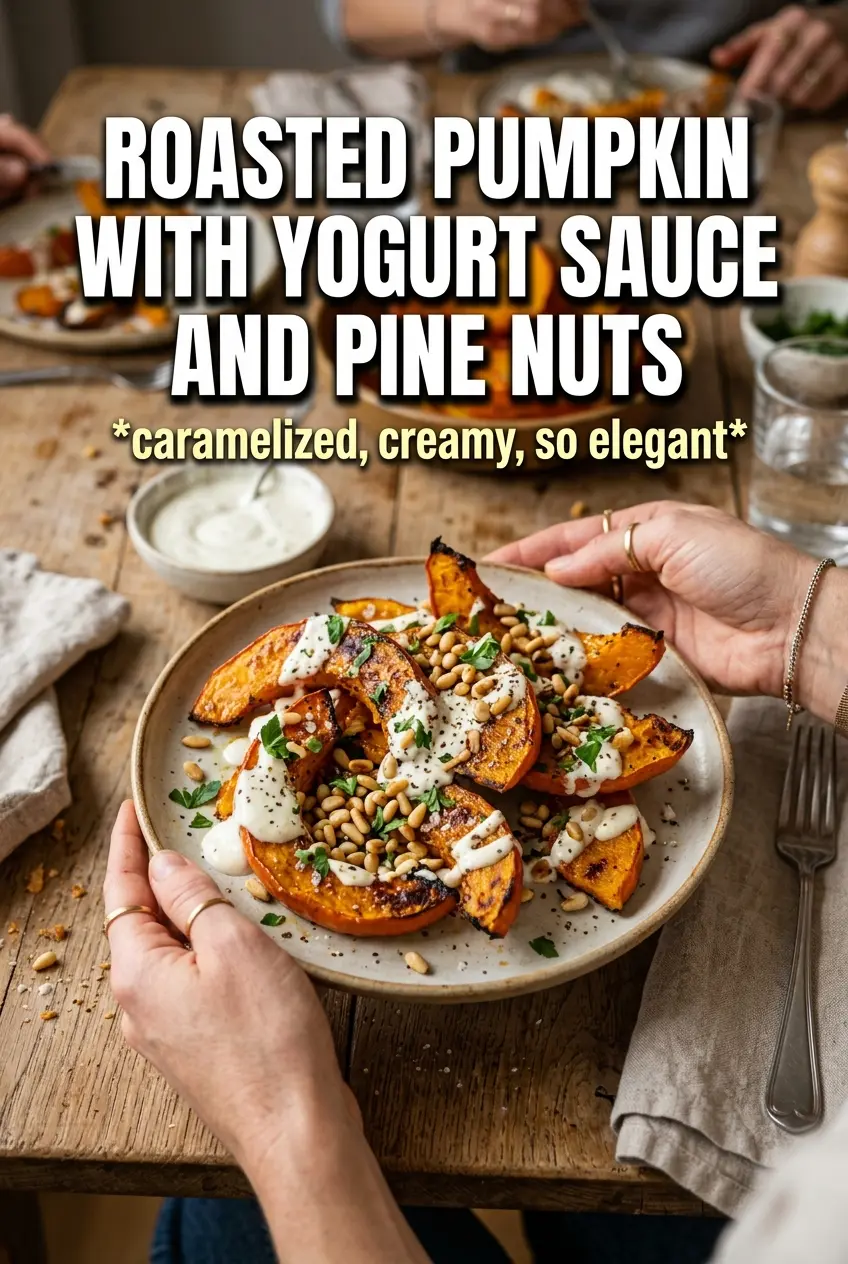
Roasted Pumpkin With Yogurt Sauce And Pine Nuts
Ingredients
Equipment
Method
- Preheat the oven to 425F, then toss the pumpkin wedges with olive oil, cumin, coriander, smoked paprika, cayenne, salt, and pepper until evenly coated. The wedges should look glossy and speckled with spices.
- Spread the seasoned wedges on a sheet pan in a single layer and roast for 30-35 minutes, until caramelized. Look for browned edges and tender centers.
- In a bowl, whisk Greek yogurt with minced garlic, lemon juice, fresh herbs, and salt until smooth. The sauce should be creamy and pourable for spreading.
- Spread the yogurt sauce on a serving platter, then arrange the warm roasted pumpkin over the sauce. Leave some sauce visible between wedges.
- Scatter toasted pine nuts, pomegranate seeds, and fresh mint over the pumpkin, then drizzle with pomegranate molasses. Finish with a visible sweet-tart shine across the top.