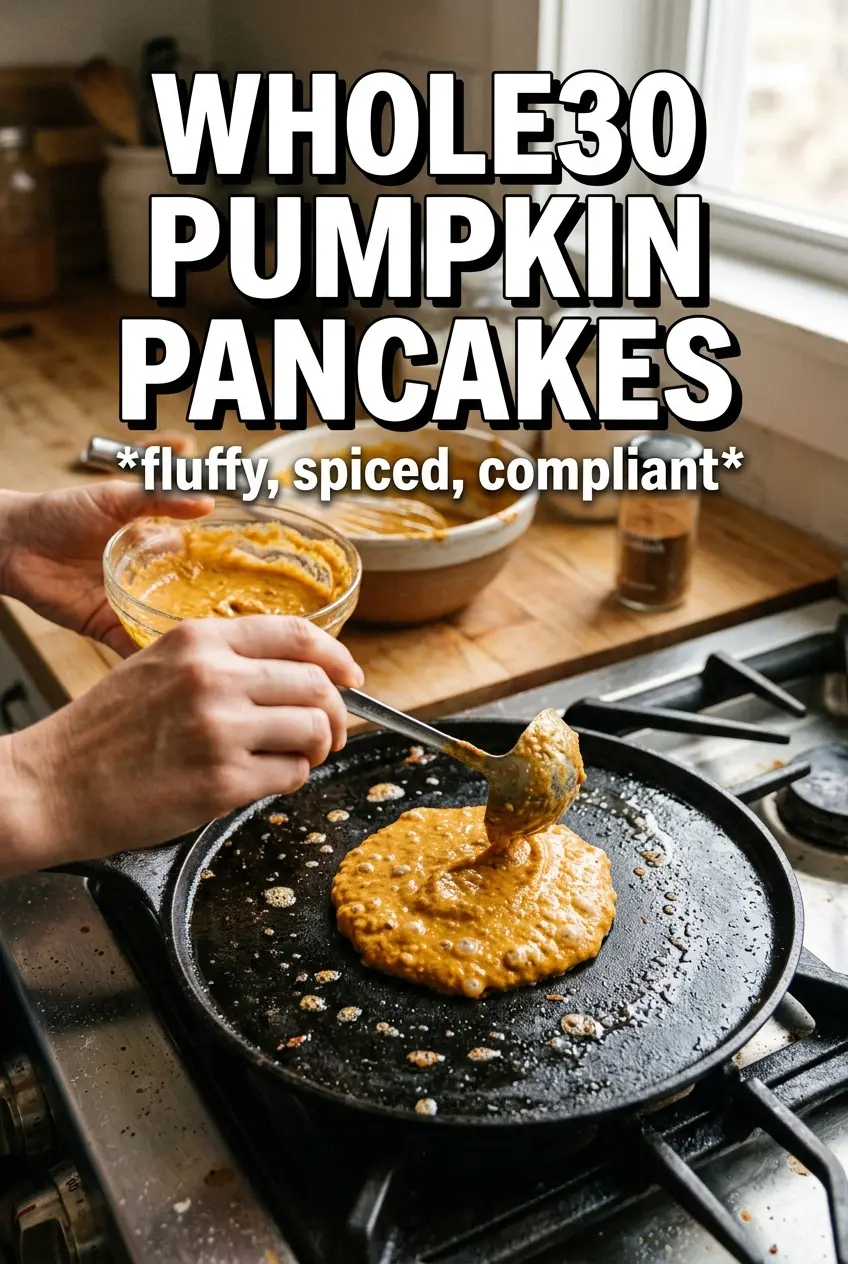
These Whole30 pumpkin pancakes come out soft, lightly custardy in the middle, and just sturdy enough to flip without falling apart when you keep them small. The banana brings natural sweetness and helps bind the batter, while the pumpkin gives the pancakes that earthy, cozy flavor without turning them heavy or gummy.
The trick is treating this more like a spoonable batter than a classic pancake mix. Four eggs sound like a lot, but they’re what keep these grain-free pancakes cohesive, especially with banana and pumpkin both adding moisture. Cooking them over medium-low heat matters too, because the outside can brown before the center sets if the pan runs too hot.
Below, I’ve included the one adjustment that makes these easier to flip, plus the best way to handle the batter if it thickens while you’re cooking. Small pancakes, gentle heat, and a steady hand make all the difference here.
The batter was thinner than my usual pancakes, but cooking them small made them flip beautifully. They came out soft in the middle with just enough structure, and the almond butter on top was perfect.
Bookmark these Whole30 pumpkin pancakes for a grain-free breakfast that flips best when you keep the batter small and the heat low.
The Small Pancakes Trick That Keeps These from Falling Apart
With grain-free pancakes, size matters more than people expect. A big pancake has too much surface area for the eggs to set evenly before the bottom gets too dark, and that’s when the flip turns messy. These work best as 2- to 3-tablespoon rounds because they set faster, stay tender, and hold together when you slide the spatula underneath.
The other thing that keeps this recipe in the safe zone is the batter consistency. It should be thinner than classic pancake batter, almost like a thick pourable custard. If it looks scoopable instead of pourable, the pancakes usually turn dense. If your banana was especially large, a spoonful of almond butter helps restore structure without making the batter dry.
- Small portions — These are delicate by design. Smaller pancakes cook through more evenly and flip with less stress.
- Medium-low heat — Hot pans brown the outside before the center sets. You want steady, gentle heat here.
- Very smooth banana — Any little lumps can weaken the batter and make the texture uneven, so mash it until it’s almost paste-like.
What Each Ingredient Is Actually Doing in These Whole30 Pancakes
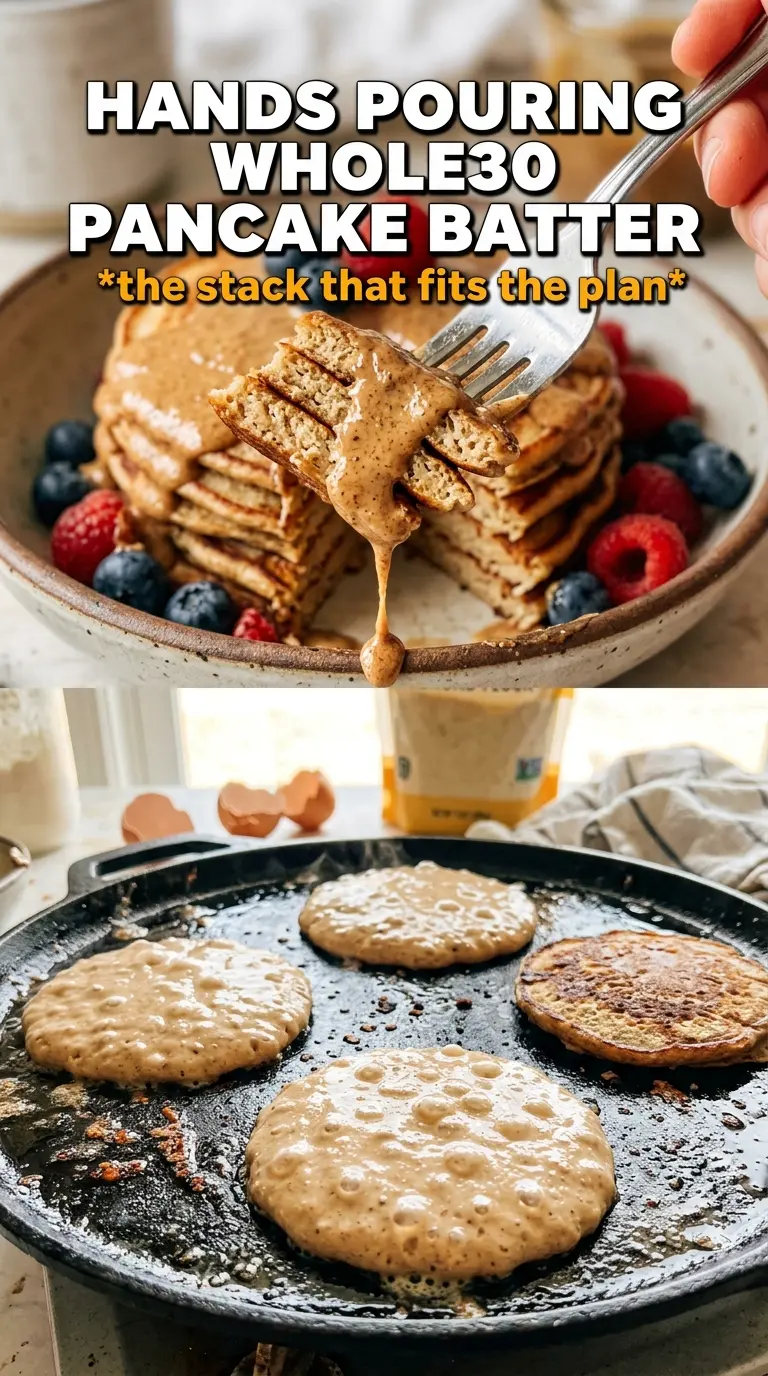
- Pumpkin puree — This gives the pancakes their color, moisture, and mellow squash flavor. Use plain pumpkin puree, not pumpkin pie filling, or the batter will be too sweet and spiced.
- Banana — The banana acts as the binder and sweetener. It needs to be ripe and mashed very smooth so it disappears into the batter instead of leaving soft bits that break the pancakes apart.
- Eggs — These are the backbone of the recipe. With no flour in the mix, the eggs set the structure, so fresh eggs matter more here than in a standard pancake recipe.
- Almond butter or cashew butter — This adds richness and helps the pancakes hold together. Cashew butter gives a milder taste; almond butter brings a deeper, nuttier edge. Use a smooth one, not a gritty natural butter that separates badly.
- Baking soda — There isn’t much lift in these pancakes, but baking soda helps soften the texture and keeps them from tasting too dense. Measure it carefully because too much can leave a soapy aftertaste.
Cooking the Batter Before the Pan Gets Too Hot
Mixing the Batter Until It’s Uniform
Start by mashing the banana until there are no chunks left. Whisk it with the pumpkin, eggs, almond butter, spices, vanilla, and baking soda until the mixture looks smooth and evenly speckled. If the batter still has streaks of banana or almond butter, those spots can cook at different rates and make the pancakes patchy. The batter will look looser than standard pancake batter, and that’s exactly right.
Using Gentle Heat for a Clean Flip
Heat the skillet over medium-low and add a thin film of coconut oil. Drop the batter in small rounds and leave space between them so you can get under each one cleanly. You’re looking for the edges to set and the top to lose its wet sheen before flipping. If the bottom is browning fast but the top still looks glossy, the heat is too high.
Flipping Without Tearing the Center
Slide a thin spatula all the way under the pancake and turn it in one smooth motion. Don’t press down after flipping; that squeezes out the tender middle and can make these rubbery. The second side usually needs less time than the first, just enough to set and pick up a little color. Pull them when the centers spring back lightly and the edges feel firm to the touch.
Make Them Dairy-Free and Whole30-Friendly
These are already dairy-free as written, as long as you cook them in coconut oil and top them with compliant nut butter and fruit. Check your pumpkin pie spice blend too, since some store-bought mixes include non-compliant additives. The finished pancakes stay tender and rich without any milk or butter.
Swap in Cashew Butter for a Milder Flavor
Cashew butter makes the pancakes a little softer in flavor and lets the pumpkin come through more clearly. Almond butter gives a nuttier finish and a slightly firmer batter, so if you swap between them, expect a small change in texture. Use whichever one is smoothest and easiest to whisk in.
How to Stretch the Batter for More Servings
You can make these into more, smaller pancakes if you need to feed extra people, but don’t make them much larger than 3 tablespoons each. Bigger pancakes are harder to flip cleanly because the center stays loose longer than the edges. If you want a fuller batch, double the recipe instead of stretching each pancake too wide.
Storage and Reheating
- Refrigerator: Store in an airtight container for up to 3 days. They soften a little as they sit, but they still hold together well.
- Freezer: Freeze in a single layer, then transfer to a bag or container for up to 2 months. Separate layers with parchment so they don’t stick together.
- Reheating: Warm in a dry skillet over low heat or in a toaster oven until heated through. Skip the microwave if you can, because it makes the centers soggy before the outside warms up.