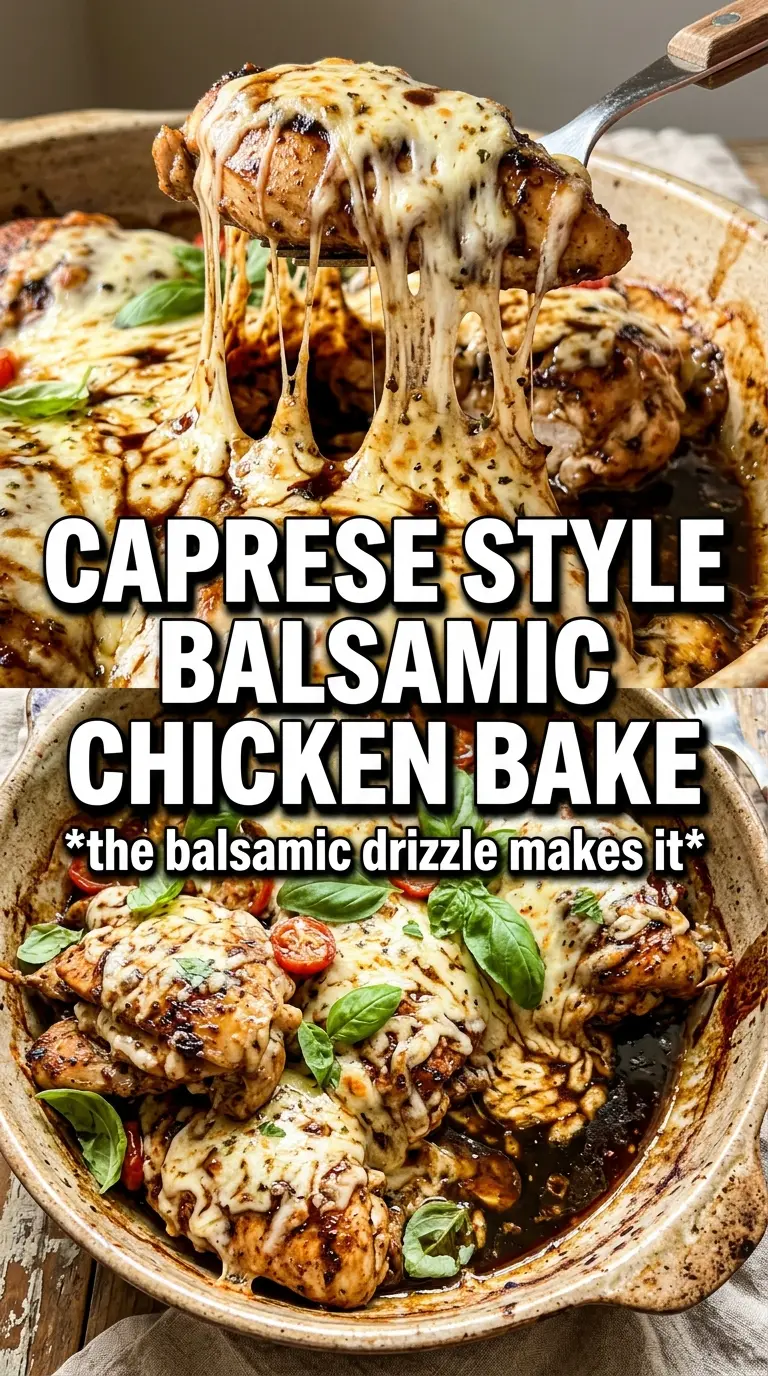
Juicy chicken breasts, a sticky balsamic glaze, and melted mozzarella make this the kind of dinner that looks special without asking for much more than a skillet and a baking dish. The chicken stays tender because it gets a short marinade before it ever hits the pan, and the glaze turns glossy and slightly caramelized instead of sharp or thin. That balance matters. You get enough acidity to cut through the cheese, enough sweetness to round it out, and enough savoriness from the garlic and Dijon to keep every bite interesting.
What makes this version work is the order. The chicken gets a quick sear first, which gives the outside a little color and keeps the oven from having to do all the work. Then the mozzarella goes on only at the end, just long enough to melt without drying out or turning rubbery. The cherry tomatoes and basil bring the caprese element into focus, so the dish tastes fresh instead of heavy.
Below, I’ll walk through the small details that keep the sauce from going flat, plus a few swaps if you need to work with what’s in the fridge. The method is straightforward, but there are a couple of spots where timing changes the whole result.
The chicken stayed juicy and the balsamic turned into a glossy glaze in the oven instead of burning in the pan. I loved how the mozzarella melted over the top without taking over, and the basil at the end made it taste fresh, not heavy.
Save this balsamic baked chicken breast with mozzarella for a caprese-style dinner with a glossy glaze and melted cheese.
The Part Most People Get Wrong: Too Much Heat Too Soon
The balsamic mixture is doing two jobs here: seasoning the chicken and helping it stay moist while it cooks. The mistake is pushing that glaze over high heat from the start. Balsamic has sugar in it, and sugar burns fast in a hot skillet before the chicken has a chance to cook through. A short sear is enough to build color. The oven should finish the job gently.
Another thing that matters is reserving some of the marinade before it touches the raw chicken. That extra bit gets added to the pan and bakes into the sauce, which keeps the flavor bright and layered instead of flat. If you pour in only the used marinade, you’re left with a muddy glaze that has lost its clean balsamic edge.
- Boneless skinless chicken breasts — Pound them to an even thickness if one end is much thicker than the other. That keeps the thinner side from drying out while the thicker side catches up.
- Balsamic vinegar — Use a balsamic you actually like the taste of. This isn’t the place for a harsh, thin bottle, because the vinegar reduces and concentrates as it cooks.
- Honey — It smooths out the sharpness of the vinegar and helps the glaze cling. Maple syrup works in a pinch, but it gives a softer, less classic finish.
- Dijon mustard — It doesn’t make the dish taste mustardy. It helps the marinade emulsify a little so the oil and vinegar don’t separate instantly.
- Fresh mozzarella — Fresh mozzarella melts into soft, milky puddles. Pre-shredded mozzarella will work, but it won’t give you the same Caprese-style finish.
- Cherry tomatoes — They add moisture and a sweet pop after the bake. Halving them helps them soften faster and release their juices right onto the chicken.
What Each Ingredient Is Actually Doing in This Recipe
- Primary ingredient (the star) — Quality matters most. Choose the best you can find.
- Cooking medium (oil, butter, or broth) — This carries flavors and prevents dryness.
- Seasonings (salt, pepper, spices, herbs) — Layer flavors so nothing overpowers. Build depth gradually.
- Aromatics (garlic, onion, herbs) — Cook with fat to bloom flavors. Become the foundation.
- Supporting ingredients — Complement the main ingredient without overpowering it.
- Sauce or liquid (if applicable) — Brings flavors together. Balance richness with acid.
- Acid (lemon, vinegar, wine, or other) — Brightens and prevents flat-tasting results.
- Final finish (garnish, glaze, or sauce) — Prevents one-dimensional taste and adds visual appeal.
Building the Glaze, Sear, and Final Melt Without Drying Out the Chicken
Mixing the Marinade
Whisk the balsamic vinegar, olive oil, honey, garlic, and Dijon until the mixture looks combined and glossy. It won’t stay fully emulsified, and that’s fine, but you want the honey broken up before it touches the chicken. Season the chicken generously on both sides before it goes in. If the chicken sits too long in a very acidic marinade, the surface can turn a little tight, so keep the marinating window to about 20 minutes.
Getting the Sear Right
Heat the skillet until the oil shimmers, then lay in the chicken without crowding the pan. You’re looking for a golden crust, not a deep burn, and about 3 minutes per side is enough in most pans. If the chicken sticks hard when you try to turn it, it isn’t ready yet. Let it release naturally so you don’t tear the surface you just worked to build.
Finishing in the Oven
Add the reserved marinade and move the skillet to the oven. Bake until the chicken reaches 165°F in the thickest part, which usually takes 18 to 20 minutes depending on size. Pull it as soon as it hits temp; a few extra minutes can take the breast from juicy to chalky. If your chicken breasts are very large, rest them a little longer after baking before adding the cheese.
The Cheese and Tomato Finish
Top the hot chicken with mozzarella slices and the halved cherry tomatoes, then return it to the oven just until the cheese softens and starts to melt into the sauce. Don’t leave it in long enough to fully dry the tomatoes or split the cheese. A few minutes is enough. Finish with balsamic glaze and fresh basil after it comes out so the basil stays bright and the glaze keeps its shine.
How to Adapt This When You Need a Different Finish
Dairy-Free Version
Skip the mozzarella and finish with extra tomatoes and basil, plus a little more balsamic glaze. You’ll lose the creamy melt on top, but the dish still lands in that sweet-savory Caprese lane. A spoonful of dairy-free pesto after baking can add some richness back if you want a fuller finish.
Lower-Sugar Version
Cut the honey back to 1 tablespoon and let the balsamic reduce a little longer in the oven. The glaze will be a touch sharper and less sticky, but the flavor stays balanced. This is the version I’d use if the tomatoes are especially sweet.
Chicken Thigh Swap
Boneless skinless thighs work well here and stay juicier if you like a richer result. They usually need a few extra minutes in the oven, so go by temperature instead of the clock. The final dish will taste a little more savory and less lean than the breast version.
Making It Ahead
You can marinate the chicken for up to 4 hours, but I wouldn’t go much longer because the vinegar starts to change the texture. Sear and bake it just before serving, then add the mozzarella and tomatoes at the end. The basil should always go on last so it stays fresh and doesn’t darken.
Storage and Reheating
- Refrigerator: Store leftovers in an airtight container for up to 3 days. The mozzarella will firm up, but the flavor holds well.
- Freezer: You can freeze the cooked chicken without the basil for up to 2 months, though the mozzarella texture softens after thawing. I prefer freezing only the chicken and sauce, then adding fresh cheese and tomatoes after reheating.
- Reheating: Warm it covered in a 325°F oven until heated through. The biggest mistake is blasting it in the microwave, which toughens the chicken and makes the cheese greasy.
Answers to the Questions Worth Asking
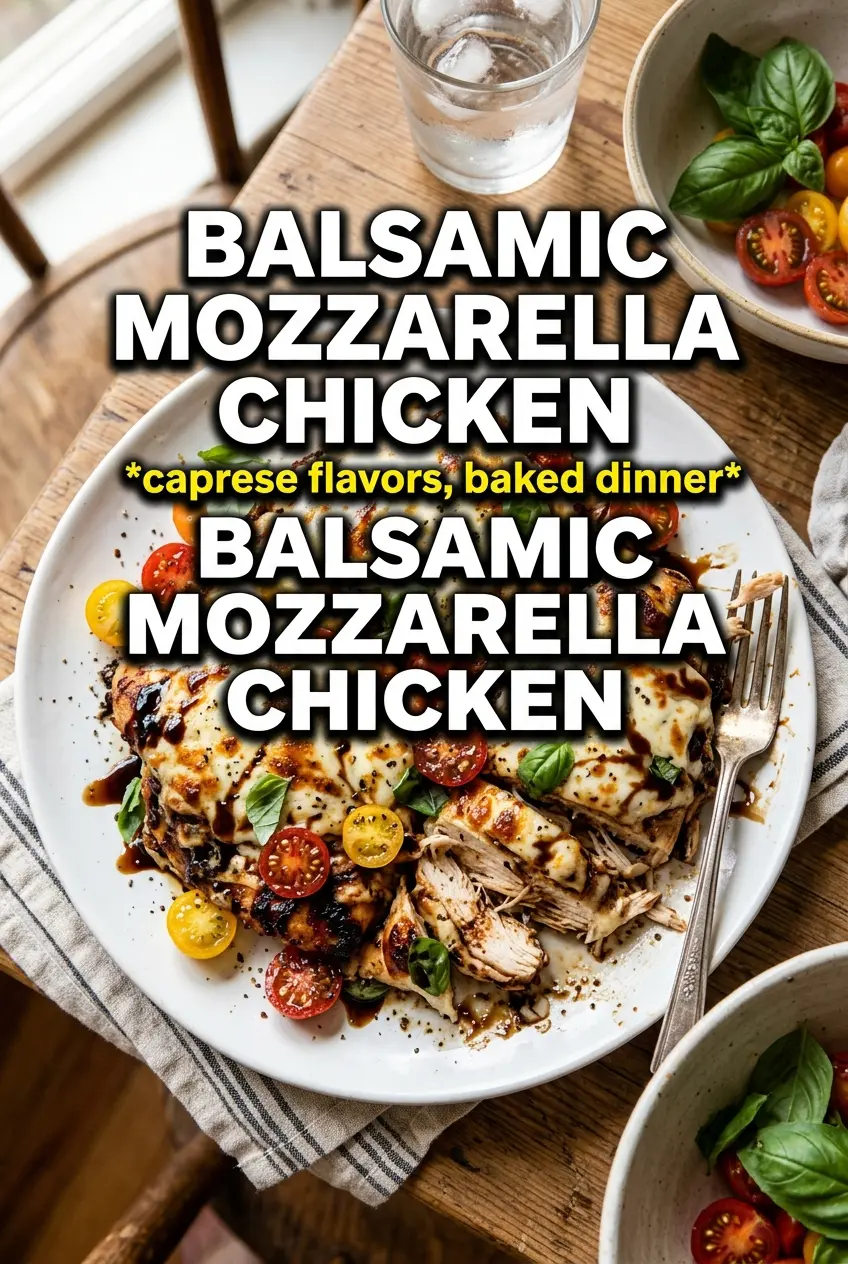
Balsamic Baked Chicken Breast with Mozzarella
Ingredients
Equipment
Method
- Whisk together balsamic vinegar, olive oil, honey, garlic, and Dijon mustard, then season the mixture with salt, pepper, garlic powder, and Italian seasoning. Reserve some marinade before adding it to the chicken.
- Season the chicken with salt, pepper, garlic powder, and Italian seasoning, then coat it in the reserved marinade and marinate for 20 minutes. Keep it at room temperature only if your kitchen is cool; otherwise refrigerate.
- Preheat the oven to 400°F, then heat an oven-safe skillet over medium-high heat and sear the marinated chicken for 3 minutes per side until golden. Watch for browned edges before moving to the next step.
- Transfer the skillet to the oven using the remaining marinade, and bake at 400°F for 18-20 minutes until the internal temperature reaches 165°F. The chicken should look opaque throughout with light caramelization.
- Remove the chicken from the oven and top each breast with sliced fresh mozzarella and halved cherry tomatoes. Add the toppings while the chicken is hot so they start melting immediately.
- Return the skillet to the oven at 400°F for 4-5 minutes until the cheese is fully melted and just beginning to turn golden. You should see the mozzarella soften and lightly bubble.
- Drizzle with balsamic glaze, then garnish with fresh basil leaves before serving. Finish with a visible balsamic sheen over the mozzarella and tomatoes.