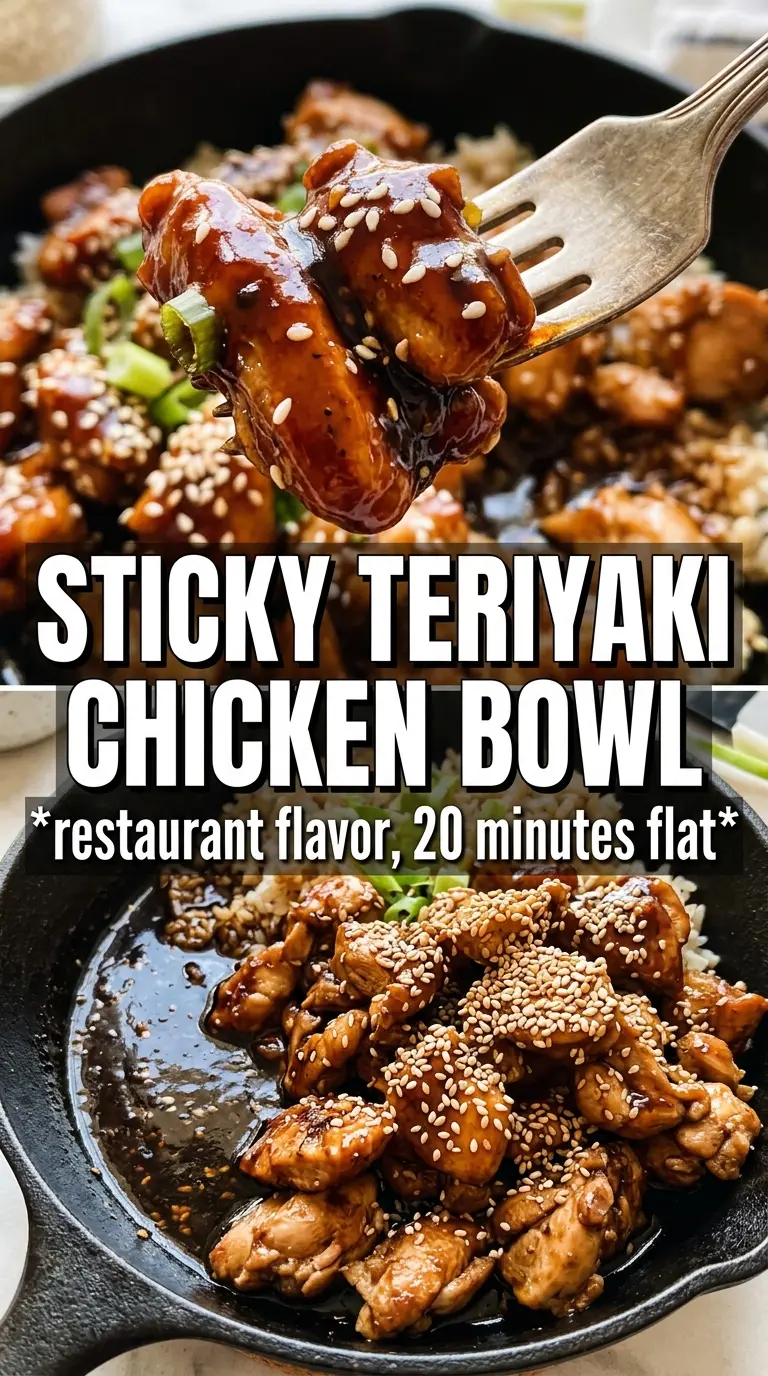
Sticky, glossy teriyaki chicken has a way of disappearing fast once it hits the table. The sauce clings to every piece, the edges of the chicken go deep amber and a little blistered, and the whole pan smells like garlic, ginger, and caramelized soy. Piled over steamed rice, it’s the kind of dinner that feels familiar in the best possible way and still tastes better than takeout when you make it at home.
What makes this version work is the split use of the sauce. Half becomes the marinade, which seasons the chicken all the way through, and the rest gets cooked down in the pan so it turns thick and glossy instead of thin and watery. The cornstarch slurry goes in only after the sauce has come to a simmer, which keeps it smooth and prevents that raw, pasty texture some quick teriyaki sauces can get.
Below, I’ve included the little details that matter most: how long to let the chicken marinate, when the sauce should look ready, and what to do if your glaze thickens too quickly in the pan.
The sauce thickened up fast and stayed glossy instead of getting watery. I served it over rice with broccoli, and the chicken had that sticky, caramelized edge I was hoping for.
Save this teriyaki chicken for the nights when you want sticky glaze, caramelized edges, and fast rice-bowl dinner comfort.
The Trick to Teriyaki That Sticks Instead of Pooling
Teriyaki falls flat when the sauce is all sweetness and no structure. If the pan is too cool, the marinade just sits there and never gets the chance to reduce into a lacquer. If the heat is too high, the sugar can scorch before the chicken is cooked through. The sweet spot is a medium-high skillet that gives you quick browning on the thighs and enough heat to evaporate the excess liquid in the sauce.
Boneless skinless thighs are the right cut here because they stay juicy while the sauce reduces. Chicken breast can work, but it needs a shorter cook time and a little more attention, since it dries out before the glaze reaches the right consistency. The marinade also needs a brief rest, not hours on end. Twenty minutes is enough to season the surface and keep the chicken from tasting flat without making it too wet to sear well.
- Boneless skinless chicken thighs — They give you the best balance of tenderness and browning. Breasts can be used, but slice them thinner and pull them sooner.
- Soy sauce — This is the backbone of the glaze. Use regular soy sauce for the full salty-sweet effect; low-sodium works if you want a milder finish, but the sauce will taste a little softer.
- Brown sugar and honey — Both help the sauce turn sticky and glossy. Honey brings shine, while brown sugar gives the deeper caramel note that makes the edges taste cooked, not just sauced.
- Mirin or rice vinegar — Mirin gives a round sweetness and classic teriyaki feel. Rice vinegar is the cleaner swap if that’s what you have, but the sauce will taste a touch brighter and less rich.
- Cornstarch slurry — This is what turns the pan sauce into a coating glaze. Mix it with cold water first; if it goes in dry or over direct heat, it clumps before it can thicken evenly.
What Each Ingredient Is Actually Doing in This Recipe
- Primary ingredient (the star) — Quality matters most. Choose the best you can find.
- Cooking medium (oil, butter, or broth) — This carries flavors and prevents dryness.
- Seasonings (salt, pepper, spices, herbs) — Layer flavors so nothing overpowers. Build depth gradually.
- Aromatics (garlic, onion, herbs) — Cook with fat to bloom flavors. Become the foundation.
- Supporting ingredients — Complement the main ingredient without overpowering it.
- Sauce or liquid (if applicable) — Brings flavors together. Balance richness with acid.
- Acid (lemon, vinegar, wine, or other) — Brightens and prevents flat-tasting results.
- Final finish (garnish, glaze, or sauce) — Prevents one-dimensional taste and adds visual appeal.
How to Build the Glaze in the Pan Without Breaking It
Mixing the Marinade and Splitting It Cleanly
Whisk the soy sauce, sugar, honey, mirin, sake, garlic, and ginger until the sugar looks mostly dissolved. Then separate out half before the chicken goes in. That reserved portion never touches raw chicken, so it’s safe to simmer down into the finished sauce later. If you skip that step and try to save marinade after the chicken has sat in it, you’ll end up throwing the whole batch away or taking a risk you don’t need to take.
Getting the Sear on the Chicken
Let the chicken come to the pan with some marinade clinging to it, but don’t drench the skillet. Too much liquid prevents browning and turns the first side gray before it has a chance to caramelize. Cook until the surface is deep golden brown and the edges look sticky and a little darkened. If the pan starts smoking hard or the sugar looks black, the heat is too high; drop it a touch and keep going.
Turning Pan Drippings Into Sauce
Once the chicken comes out, pour in the reserved marinade and bring it to a steady simmer. You should see small bubbles all across the surface, not a violent boil. Stir in the cornstarch slurry and keep the sauce moving for a couple of minutes until it shifts from thin and shiny to thick enough to coat a spoon. If it looks lumpy, the slurry was added too fast or the pan was too hot when it went in.
Coating the Chicken at the End
Return the chicken to the skillet and turn each piece through the glaze until every surface is lacquered. This last step only takes a minute or two. You’re not cooking the chicken again from raw; you’re finishing it in the sauce so the outside picks up that sticky teriyaki coating. Serve right away over rice, while the glaze is still glossy and loose enough to drizzle.
How to Adapt This for Different Pans, Sweetness Levels, and Diets
Make It Gluten-Free
Swap the soy sauce for tamari or a certified gluten-free soy sauce. The flavor stays close, and the texture of the glaze doesn’t change. Just keep the rest of the method the same, since the thickening comes from the cornstarch, not the soy sauce itself.
Use Chicken Breast Instead of Thighs
Chicken breast works, but it needs gentler timing. Cut it into large bite-size pieces or thin cutlets and shorten the sear so it stays juicy. You’ll lose a little richness compared with thighs, but the sauce still carries the dish.
Reduce the Sweetness
Cut the brown sugar back slightly and keep the honey in place. Honey helps with shine, so if you remove it completely, the sauce will still taste fine but won’t have the same glossy finish. The vinegar or mirin keeps the sweetness from feeling heavy.
Storage and Reheating
- Refrigerator: Store leftovers in an airtight container for up to 4 days. The sauce will thicken as it chills, which is normal.
- Freezer: It freezes well for up to 2 months. Cool it fully first, then pack the chicken and sauce together so the meat stays moist.
- Reheating: Warm gently in a skillet over medium-low with a splash of water if needed. High heat can tighten the chicken and make the sauce look sticky in the wrong way.
Questions I Get Asked About This Recipe
Teriyaki Chicken
Ingredients
Equipment
Method
- Whisk together soy sauce, brown sugar, honey, mirin (or rice vinegar), sake (or dry sherry), garlic, and ginger until the sugar dissolves and the mixture looks uniform. Reserve half of the marinade for the sauce and pour the other half over the chicken thighs.
- Marinate the chicken for 20 minutes, turning once so the surface stays coated and ready to brown. You should see the chicken darken slightly as it absorbs the teriyaki flavors.
- Heat vegetable oil in a large skillet over medium-high heat until it shimmers. Add the marinated chicken and cook 5-6 minutes per side until caramelized with dark amber blistered edges.
- Check doneness by measuring the internal temperature; cook until it reaches 165°F, then remove the chicken to a plate. The surface should look glossy and sticky even before saucing.
- Pour the reserved marinade into the pan and bring it to a simmer, scraping up any browned bits. Stir in the cornstarch slurry and cook 2-3 minutes until the sauce becomes thick and glossy.
- Return the chicken to the pan and turn to coat in the teriyaki sauce, letting the glaze cling to the caramelized surface. If it looks too tight, simmer briefly just to loosen and re-coat.
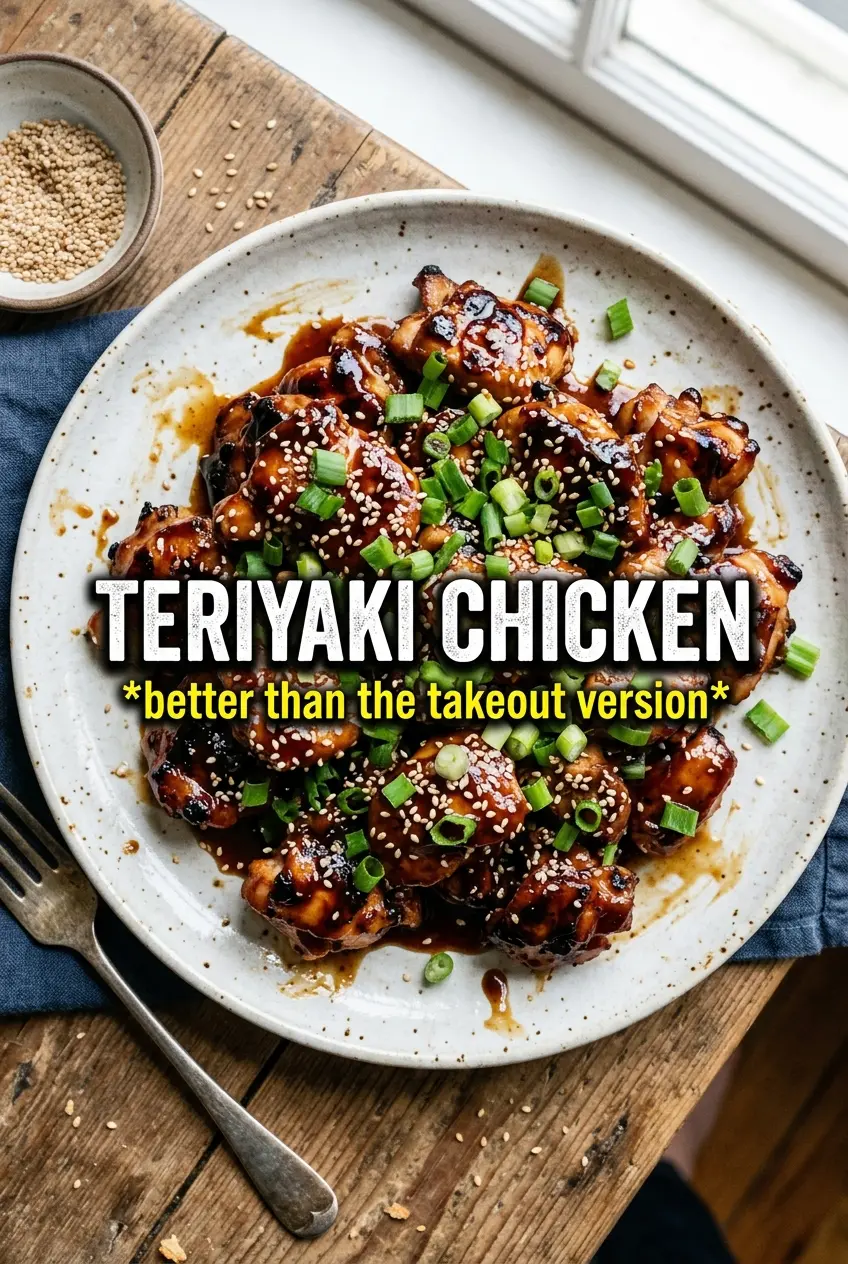
- Serve the teriyaki chicken over steamed rice and drizzle with any extra sauce from the skillet. Sprinkle sesame seeds and add sliced green onions so they embed in the sticky coating.
- For a bright accent, serve with steamed broccoli. The finished plate should show dark amber sauce sheen, sesame texture, and fresh green onion color over the rice.