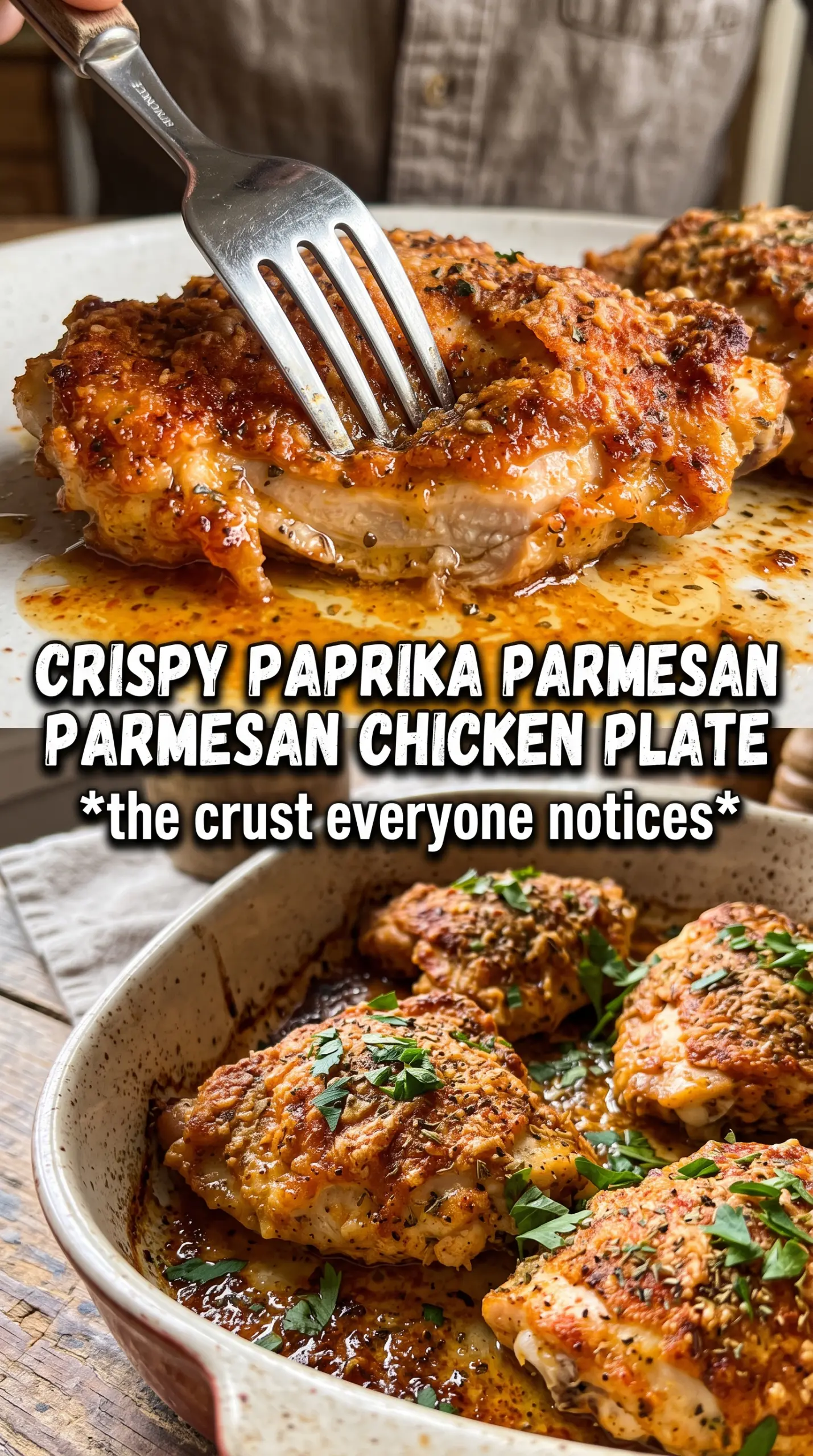
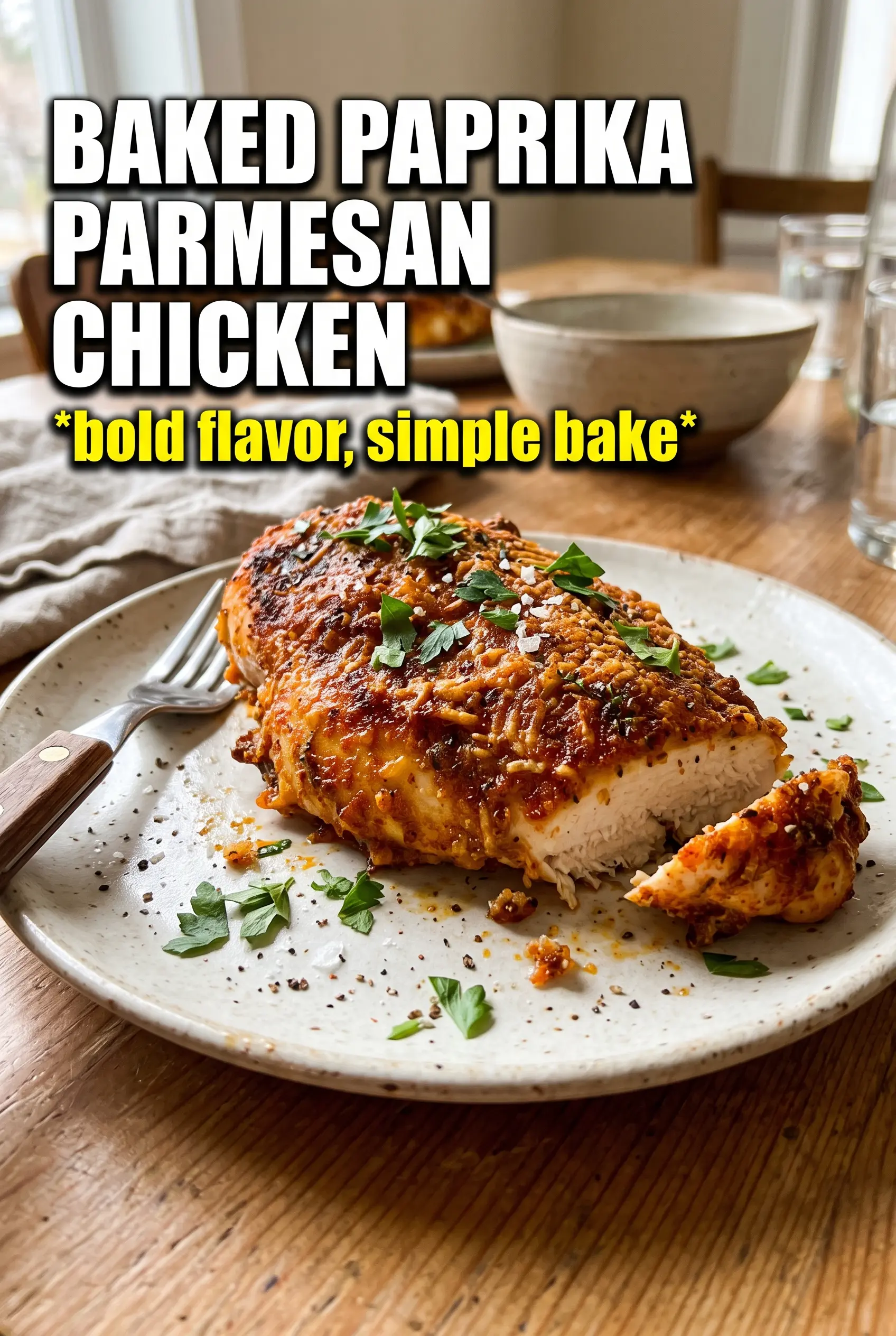
Golden, crackly, and deeply savory, baked paprika Parmesan chicken brings the kind of crust that makes plain chicken breasts feel worth sitting down for. The smoked paprika turns the coating a vivid orange-red while the Parmesan browns into a salty, crisp shell that clings to every bite instead of sliding off the pan.
The trick is building flavor in two layers: first the paprika oil, then the Parmesan-panko crust. That keeps the seasoning from tasting dusty and gives the chicken a better chance of staying juicy while the top gets the kind of crunch people usually expect from frying. A hot oven does the heavy lifting here, but the right coating ratio is what makes it work.
Below, I’ll walk through the part that matters most: how to press the crust on so it actually stays put, not just sits there looking pretty. There’s also a quick note on swaps if you want to make it gluten-free or adjust the seasoning without losing that bold paprika-Parmesan finish.
The paprika oil and Parmesan crumb made a crust that stayed crisp all the way through dinner, and the chicken was still juicy at 165°F. I served it with lemon like suggested and it balanced the saltiness perfectly.
Save this baked paprika Parmesan chicken for the nights when you want a crisp, smoky chicken dinner with almost no cleanup.
The Coating That Stays Crisp Instead of Going Soggy
The biggest mistake with crusted chicken is piling on too much moisture before it hits the oven. If the oil and seasoning layer is too thin, the crumbs dry out before they brown. If it’s too thick, the coating slips and turns greasy. This version works because the paprika oil goes on first and acts like glue, then the Parmesan-panko mixture gets pressed in firmly so it can toast instead of steam.
A 425°F oven gives you enough heat to brown the cheese quickly without overcooking the chicken breast. The other piece people miss is spacing: give the chicken room on the pan so the bottoms don’t trap steam. That’s how you keep the crust crisp on top instead of losing it in a damp patch underneath.
- Chicken breasts — Boneless, skinless breasts work best here because they bake fast enough for the crust to finish at the same time the meat cooks through. If one breast is much thicker than the others, pound it to an even thickness so the thinner edge doesn’t dry out before the center is done.
- Smoked paprika — This is the backbone of the recipe. It brings the color and that warm, savory edge that plain paprika won’t match. If you only have regular paprika, the chicken will still work, but it’ll taste flatter and the crust won’t have the same deep color.
- Freshly grated Parmesan — Freshly grated cheese melts and browns better than the shelf-stable kind in a canister. That grated-from-a-block texture also helps the crust cling. Pre-grated Parmesan can work in a pinch, but it usually gives a drier, less cohesive crust.
- Panko breadcrumbs — Panko keeps the crust light and crisp instead of dense. Regular breadcrumbs are finer and can make the topping feel heavier, but they’ll still get the job done if that’s what you have.
What Each Ingredient Is Actually Doing in This Recipe
- Primary ingredient (the star) — Quality matters most. Choose the best you can find.
- Cooking medium (oil, butter, or broth) — This carries flavors and prevents dryness.
- Seasonings (salt, pepper, spices, herbs) — Layer flavors so nothing overpowers. Build depth gradually.
- Aromatics (garlic, onion, herbs) — Cook with fat to bloom flavors. Become the foundation.
- Supporting ingredients — Complement the main ingredient without overpowering it.
- Sauce or liquid (if applicable) — Brings flavors together. Balance richness with acid.
- Acid (lemon, vinegar, wine, or other) — Brightens and prevents flat-tasting results.
- Final finish (garnish, glaze, or sauce) — Prevents one-dimensional taste and adds visual appeal.
Pressing the Crust on So It Bakes, Not Falls Off
Mix the paprika oil first
Stir the olive oil with the smoked paprika, sweet paprika, garlic powder, onion powder, salt, and pepper until the oil looks evenly red-orange. You want every spoonful to carry flavor, not little streaks of spice sitting at the bottom. If the seasoning clumps, the chicken bakes unevenly and the crust ends up patchy.
Brush before you crumb
Brush the paprika oil generously over both sides of each chicken breast, then focus the crumb on the top side. The oil is what gives the coating something to grab onto, so don’t rush this step. If the chicken looks dry in spots, the topping will slide when it bakes.
Pack on the Parmesan layer
Mix the Parmesan and panko, then press it firmly into the oiled tops of the chicken. Don’t sprinkle and hope; press with a little pressure so the crumbs settle into the surface. The coating should look thick and slightly rugged, not snowy or delicate, and that texture is what gives you those browned edges.
Bake until the crust cracks at the edges
Slide the chicken onto a parchment-lined sheet and bake until the top is golden-red and the thickest part reaches 165°F. The crust should look set and bronzed at the edges, with the Parmesan turning little caramelized spots. If the top browns too quickly before the center is done, your chicken pieces were probably too thin or your oven runs hot, so check a few minutes early next time.
Gluten-Free Crust
Swap the panko for gluten-free breadcrumbs or crushed gluten-free crackers. You’ll still get a crisp top, but the texture may be a little finer and less airy than classic panko. Keep the Parmesan the same so the crust still browns well.
Dairy-Free Version
Use a dairy-free Parmesan-style topping that grates or crumbles like the real thing. The flavor won’t be as sharp or salty, so you’ll want to season the chicken a little more assertively with salt and paprika. The crust will still crisp, but it won’t brown in quite the same way.
More Heat, Less Smoke
If you want a sharper, spicier finish, add a pinch of cayenne or swap part of the sweet paprika for hot paprika. That changes the dish from mellow and smoky to more punchy and bold, so start small if you’re cooking for kids or anyone who prefers a gentler crust.
Storage and Reheating
- Refrigerator: Store leftovers in an airtight container for up to 3 days. The crust will soften a bit, but the flavor holds up well.
- Freezer: It freezes, but the crust loses some of its crispness. Freeze cooled chicken in a single layer, then wrap tightly and store for up to 2 months.
- Reheating: Warm in a 375°F oven or air fryer until heated through. Skip the microwave if you want the coating to stay crisp; that’s the fastest way to make the crust soggy.
Questions I Get Asked About This Recipe
Baked Paprika Parmesan Chicken
Ingredients
Equipment
Method
- Preheat oven to 425°F and line a baking sheet with parchment for easy release and cleanup.
- Mix olive oil with smoked paprika, sweet paprika, garlic powder, onion powder, salt, and pepper until it forms a vivid red-orange paste.
- Brush the paprika oil generously over both sides of each chicken breast so the whole surface turns coated and glossy.
- Combine Parmesan and panko, then press firmly onto the oiled chicken to fully cover the tops with an even, crumbly layer.
- Bake for 22-25 minutes at 425°F until the crust is golden-red and the chicken reaches 165°F internal temperature.
- Garnish with fresh parsley and serve with lemon wedges for bright contrast against the caramelized crust.