Juicy chicken breasts tucked into a thick ranch cream sauce hit the table with the kind of comfort that makes people pause halfway through the first bite. The sauce clings instead of running all over the plate, and the ranch seasoning gives it that familiar tang without turning the whole dish salty or flat. A good sear on the chicken matters here because it gives the sauce something savory to build on, not just cream and seasoning mixed in a pan.
This version leans on cream cheese for body, which keeps the sauce smooth and spoonable even after the chicken goes back in. Chicken broth loosens the pan and picks up the browned bits from the skillet, and that’s where a lot of the depth comes from. Fresh chives at the end keep the whole dish from tasting too heavy.
Below, I’ve included the small choices that keep the sauce silky, plus a few easy swaps if you’re working with what’s already in the kitchen.
The sauce thickened up beautifully and stayed smooth when I added the cream cheese. My husband kept going back for more, and the chicken stayed juicy all the way through.
Save this creamy ranch chicken for nights when you want a silky skillet sauce and tender chicken in under 40 minutes.
The Sear Is What Keeps the Chicken Juicy
The biggest mistake with creamy chicken skillets is rushing straight into the sauce before the chicken has color. A pale, steamed breast gives you less flavor and a thinner final dish. Searing over medium-high heat builds a browned surface that holds up when the chicken simmers in the sauce later, so the meat stays juicy instead of turning stringy.
Pull the chicken when it reaches 165°F in the thickest part and let the skillet do the rest of the work. If the pan looks dry or the browned bits are getting too dark, lower the heat before adding the broth. You want those bits loosened, not burnt.
What Each Ingredient Is Doing in the Sauce

- Chicken breasts — Boneless, skinless breasts keep this fast and lean, but they need to be cooked just to 165°F so they stay tender. If yours are very thick, pound them to an even thickness first; that gives you a better sear and prevents dry edges.
- Ranch seasoning mix — This is the backbone of the dish. Homemade ranch seasoning can work, but the packet gives consistent salt, herbs, and tang, which matters in a short-cook skillet sauce.
- Cream cheese — This is what gives the sauce its body. Cut it into cubes so it melts evenly; if you drop in a cold block, it takes longer to smooth out and can leave little soft lumps behind.
- Heavy cream — Heavy cream holds up when simmered and helps the sauce stay glossy. Half-and-half can work in a pinch, but it makes a thinner sauce and needs gentler heat.
- Chicken broth — The broth deglazes the pan and carries the browned flavor into the sauce. Water will thin the sauce, but it won’t rebuild the same savory base.
- Dried dill and fresh chives — Dill sharpens the ranch flavor, and chives keep the finished dish from tasting heavy. Don’t skip the chives if you can help it; they add a fresh onion note that wakes everything up at the end.
Building the Sauce Without Letting It Break
Getting the Browned Bits into the Broth
After the chicken comes out, the skillet should still have those caramelized bits stuck to the bottom. Add the garlic for just 30 seconds, then pour in the broth and scrape the pan with a wooden spoon until the bottom looks clean. If the garlic starts to brown too fast, the heat is too high and it will taste bitter in the finished sauce.
Making the Cream Go Smooth
Stir in the heavy cream and ranch seasoning, then bring the sauce to a gentle simmer, not a rolling boil. Add the cream cheese cubes over medium-low heat and keep stirring until they disappear into the sauce. If you dump cream cheese into a violently bubbling pan, it can separate and leave the sauce grainy instead of silky.
Bringing the Chicken Back at the End
Slide the chicken back into the skillet and spoon the sauce over the top so every piece gets coated. Let it simmer for about 3 minutes, just long enough for the flavors to settle and the chicken to warm through again. This final simmer is short on purpose; keep it going too long and the chicken starts to dry out even in a creamy sauce.
Make It Gluten-Free Without Losing the Creamy Texture
This recipe is naturally close to gluten-free, but the ranch seasoning packet is the place to check. Use a certified gluten-free ranch mix and a broth you trust, and the sauce stays just as thick and rich. The texture doesn’t change at all, which is the nice part of a skillet recipe like this.
Swap the Chicken Breasts for Thighs
Boneless chicken thighs work well if you want a richer result and a little more forgiveness on the stove. They’ll need a few extra minutes to cook through, but they stay juicy even if your heat runs a touch high. The sauce tastes slightly deeper because thighs bring more chicken fat into the pan.
Dairy-Free Version
Use unsweetened dairy-free cream and a plant-based cream cheese that melts smoothly. The sauce will taste a little less tangy and less thick, so add the dairy-free cream cheese slowly and keep the simmer gentle. The result is still cozy and spoonable, just not quite as lush as the original.
Storage and Reheating
- Refrigerator: Store in an airtight container for up to 3 days. The sauce thickens as it chills, so don’t judge the texture cold.
- Freezer: It can be frozen, but cream sauces sometimes separate a bit after thawing. Freeze in a shallow container for up to 2 months if you need to, then reheat gently.
- Reheating: Warm slowly in a covered skillet over low heat with a splash of broth or cream. High heat is what turns the sauce oily or grainy, so keep it low and stir often.
Answers to the Questions Worth Asking
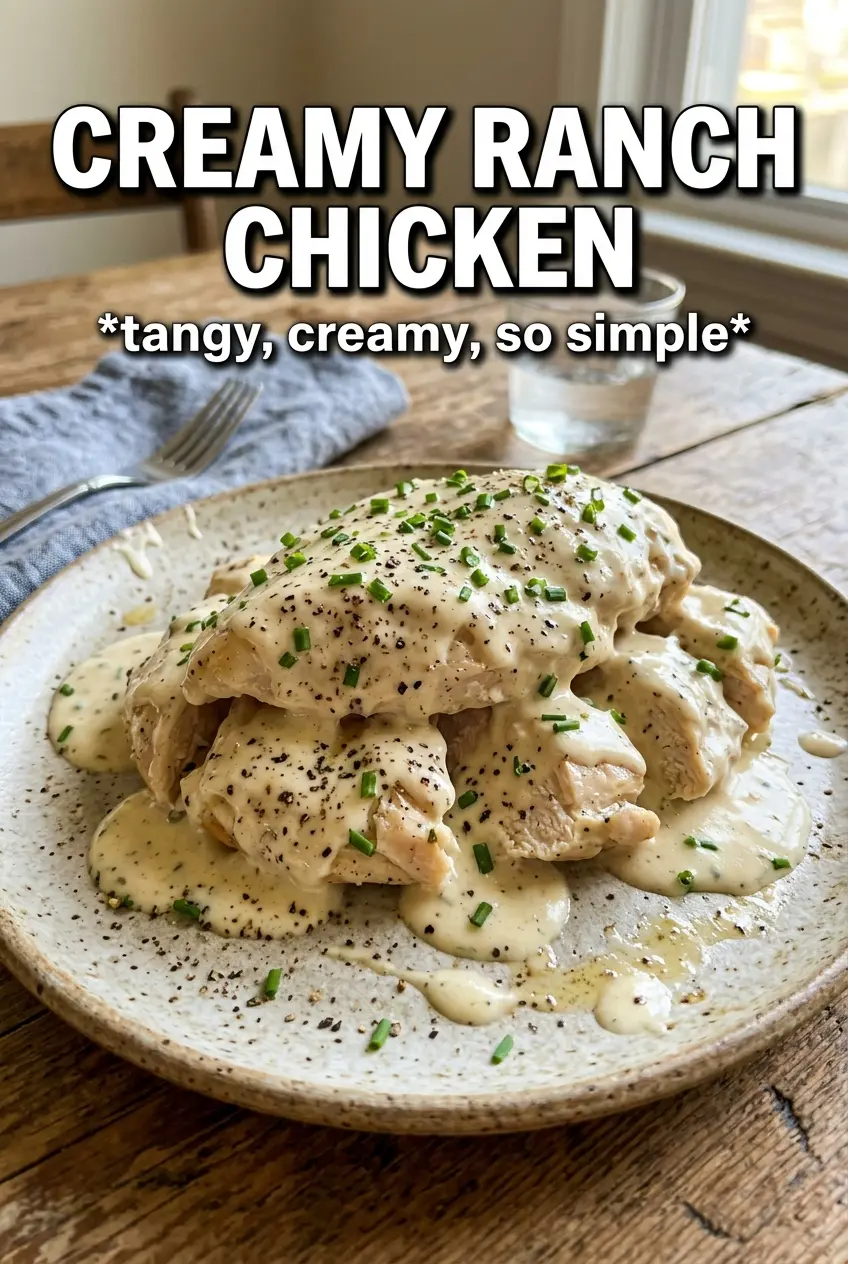
Creamy Ranch Chicken
Ingredients
Equipment
Method
- Season the chicken breasts with salt, pepper, and garlic powder to taste. Heat 2 tbsp olive oil in a large skillet over medium-high heat until shimmering, then sear for 5-6 minutes per side until golden and the internal temperature reaches 165°F, and remove to a plate.
- Place the skillet back on the heat and let any browned bits stay in the pan for flavor. Keep the oil coating the bottom so the next step deglazes evenly.
- Reduce heat slightly and cook the minced garlic in the same pan for 30 seconds, stirring until fragrant. Pour in the chicken broth and deglaze, scraping up the browned bits from the bottom.
- Stir in the heavy cream and ranch seasoning mix, then bring the sauce to a simmer. Let it simmer just until it thickens slightly, about 1-2 minutes.
- Add the cubed cream cheese and stir over medium-low heat until completely melted and the sauce is smooth. Keep the heat medium-low to prevent scorching.
- Stir in the dried dill and return the chicken breasts to the skillet. Spoon the sauce over each breast, then simmer for 3 minutes to heat the chicken through.
- Garnish with fresh chives and serve immediately. Plate over mashed potatoes or pasta so the ranch cream sauce pools around the chicken.