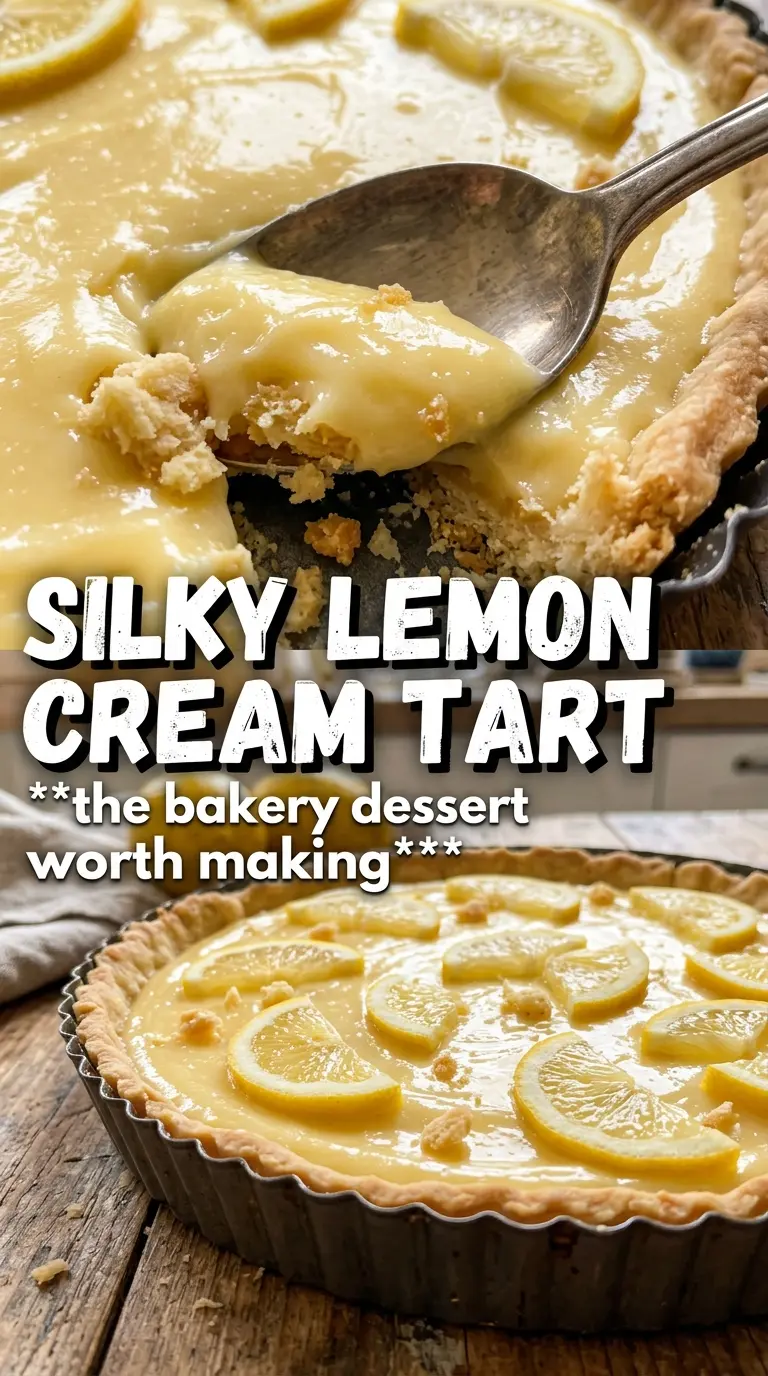
Silky lemon cream, a crisp buttery shell, and that crackling brûléed sugar top make this tart the kind of dessert people remember after the plates are cleared. The filling sets up smooth and pale, with enough lemon to taste bright instead of sharp, and the thin caramelized layer on top gives each bite a little shatter before you hit the cream underneath.
What makes this version work is the balance between the pâte sucrée and the lemon cream. The shell bakes until it’s fully dry and golden before the filling goes in, which keeps it crisp against the custard. The lemon mixture is cooked until it coats the spoon, then strained so the filling stays perfectly smooth. Cold butter gets whisked in at the end for shine and a soft, lush texture.
Below, I’ve included the parts that matter most: how to keep the tart shell from shrinking, what to watch for when the cream thickens, and the easiest way to get that crackly brûléed top without overheating the filling.
The filling set up silky and clean, and the sugar topping cracked beautifully without softening the tart underneath. I worried the lemon cream would be too sharp, but it came out balanced and elegant.
Save this French Lemon Cream Tart for the dessert table when you want a crisp shell, smooth lemon cream, and a brûléed sugar finish that slices cleanly.
The Trick to a Tart Shell That Stays Crisp Under Lemon Cream
A lemon tart can go wrong in two places: a shell that shrinks or turns soggy, and a filling that leaks or weeps after chilling. The fix starts with the pâte sucrée. Cold butter keeps the dough tender, and the rest in the fridge gives the flour time to hydrate so the shell bakes with less drama. Pressing it evenly into the tart pan matters more than working it hard. Overmixed dough turns tough, and a shell that’s stretched into the corners tends to slump as it bakes.
Blind baking the shell until it’s fully golden is nonnegotiable here. Pale pastry softens fast once the lemon cream goes in. You want a shell that feels dry, sounds faintly crisp when tapped, and holds its shape all the way to the rim. That’s what keeps every slice neat.
What Each Ingredient Is Doing in This Lemon Tart
- All-purpose flour — This gives the tart shell its structure. A pastry flour will make it a little more delicate, but all-purpose works well and holds up to the lemon cream without collapsing.
- Powdered sugar — It sweetens the shell and helps it bake into that short, tender texture you want in a French tart. Granulated sugar makes the crust a little more brittle.
- Cold butter — This is what keeps both the shell and the filling luxurious. In the shell, cold butter creates tenderness; in the filling, it emulsifies the lemon cream so it turns glossy instead of grainy.
- Lemon juice and zest — Fresh lemon juice gives the tart its clean brightness, and the zest carries the fragrant oils that make the filling taste deeper than juice alone. Bottled juice won’t give the same lift.
- Eggs — They thicken the cream naturally. If the heat climbs too high, the eggs can scramble, so cook gently and strain the mixture before adding butter.
- Granulated sugar for brûlée — This creates the brittle top layer. A thin, even sprinkle caramelizes best; too much sugar turns into a thick, bitter shell that’s hard to crack cleanly.
How to Build the Cream So It Stays Smooth
Mixing the Pâte Sucrée
Pulse the flour, powdered sugar, salt, and cold butter only until the mixture looks sandy with small bits of butter still visible. Those little butter pieces matter. They help the crust bake up tender instead of dense. Add the egg yolk and cold water just until the dough holds together when pressed. If it looks shaggy, that’s fine. It should not feel sticky or elastic.
Blind Baking for a Clean Edge
Press the dough into a 9-inch tart pan and chill it before baking. That rest keeps the sides from sliding down. Bake it until the edges are a deep golden color and the bottom no longer looks pale or matte. If the shell still looks soft in the center, give it another minute or two; an underbaked shell turns soggy the moment the filling goes in.
Cooking the Lemon Cream
Whisk the eggs, sugar, lemon juice, and zest in a saucepan over medium heat and keep stirring without walking away. The mixture should thicken enough to coat the back of a spoon after about 8 to 10 minutes. If the heat is too high, the eggs seize and you’ll get grain instead of silk. Pull it off the burner as soon as it thickens, because carryover heat keeps it moving.
Finishing with Butter and Chilling
Strain the hot cream through a fine sieve, then whisk in the cold butter a cube at a time. The filling should turn smooth, glossy, and slightly lighter in color. Pour it into the cooled shell and refrigerate until fully set. If you cut it early, the slices slump; three hours gives the cream enough time to hold a sharp wedge.
Brûléeing the Top
Sprinkle the sugar in a thin, even layer right before serving. A kitchen torch gives you the best control, and you want the surface amber with a few darker spots, not blackened. If you hold the flame too close, the sugar burns before it melts into a crisp crust. Let it sit for a minute so the topping hardens before you garnish with zest.
Three Ways to Make This Tart Fit the Moment
Gluten-Free Tart Shell
Swap in a good 1:1 gluten-free baking blend for the flour and keep the butter cold. The shell will be a little more fragile, so chill it well before baking and let it cool completely in the pan before unmolding.
Dairy-Free Version
Use a plant-based butter that behaves well in baking and in the filling. The tart will still set, but the flavor loses a little of the classic buttery richness, so lean on fresh zest for brightness.
Lemon-Lime Variation
Replace up to half of the lemon juice with fresh lime juice for a sharper, slightly more tropical edge. The tart will taste brighter and a touch less classic, but the texture stays the same as long as you keep the total liquid amount unchanged.
Storage and Reheating
- Refrigerator: Keeps for 3 days covered. The shell softens slightly, but the filling stays smooth.
- Freezer: The baked shell can be frozen, but the filled tart doesn’t thaw as cleanly. Freeze the shell only if you want to get ahead.
- Reheating: Don’t reheat the tart. Serve it chilled, and brûlée the sugar topping right before serving so the crust stays crisp.
Answers to the Questions Worth Asking
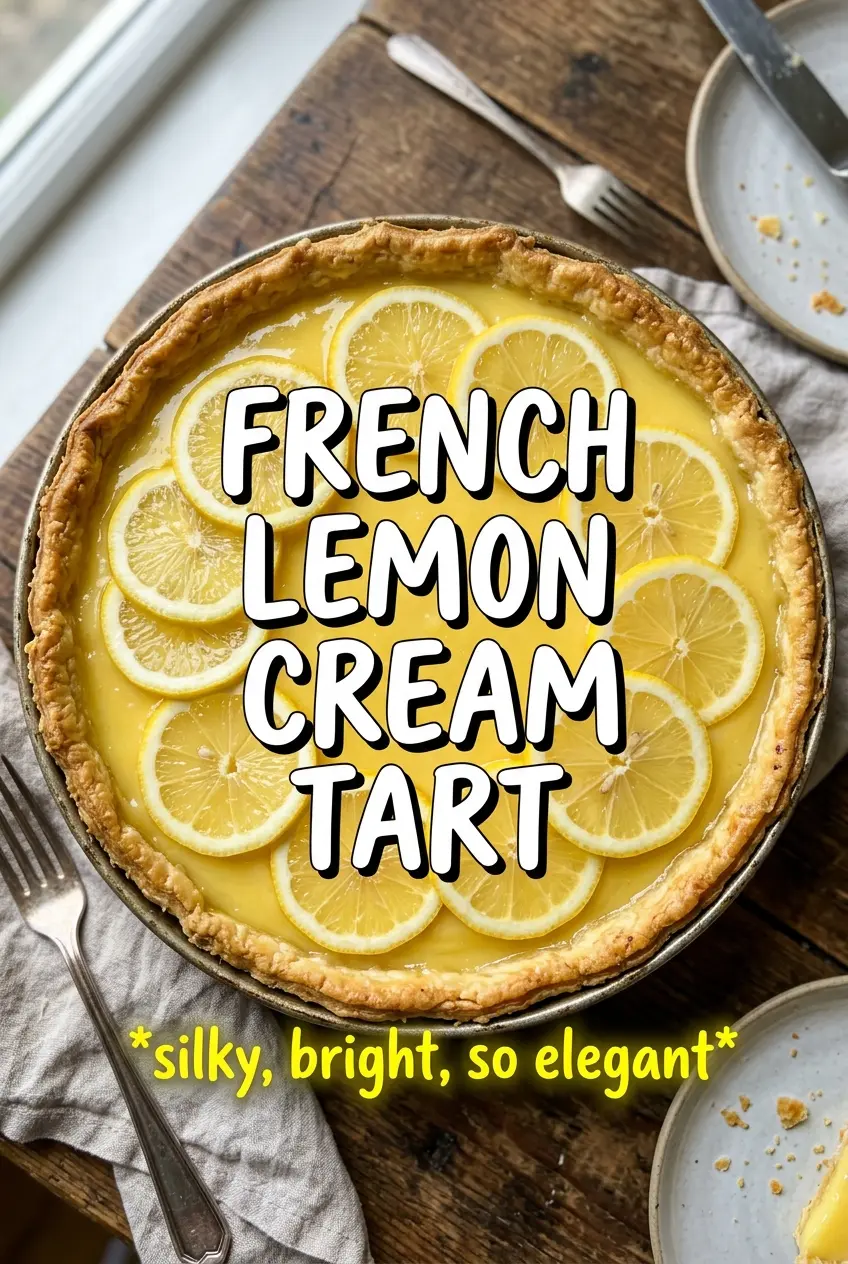
French Lemon Cream Tart
Ingredients
Equipment
Method
- Pulse all-purpose flour, powdered sugar, salt, and cold butter until the mixture looks crumbly, then scrape the bowl as needed so it’s evenly combined.
- Add egg yolk and cold water and mix just until the dough comes together into a cohesive mass, not dry crumbs.
- Press the dough into a 9-inch tart pan and smooth the bottom and sides so it’s even.
- Chill the shell for 30 minutes until firm and easier to bake.
- Blind bake at 375°F for 18-20 minutes on a sheet pan until the shell is golden all over, then cool completely.
- Whisk large eggs, granulated sugar, fresh lemon juice, and lemon zest in a saucepan until smooth.
- Cook over medium heat, stirring constantly, until thick enough to coat the back of a spoon, about 8-10 minutes, with a glossy texture.
- Remove from the heat and strain through a fine sieve to make the cream perfectly smooth.
- Whisk cold butter cubes into the warm lemon mixture one at a time until fully melted and glossy.
- Pour the lemon cream into the cooled tart shell and smooth the top flat.
- Refrigerate for 3 hours until the filling is set and slices cleanly.
- Before serving, sprinkle 2 tablespoons granulated sugar over the surface in an even layer.
- Brulee with a kitchen torch until amber and crackled, watching for bubbling caramelization and a glassy finish.
- Garnish with lemon zest curls and serve immediately for the best shattering crust.