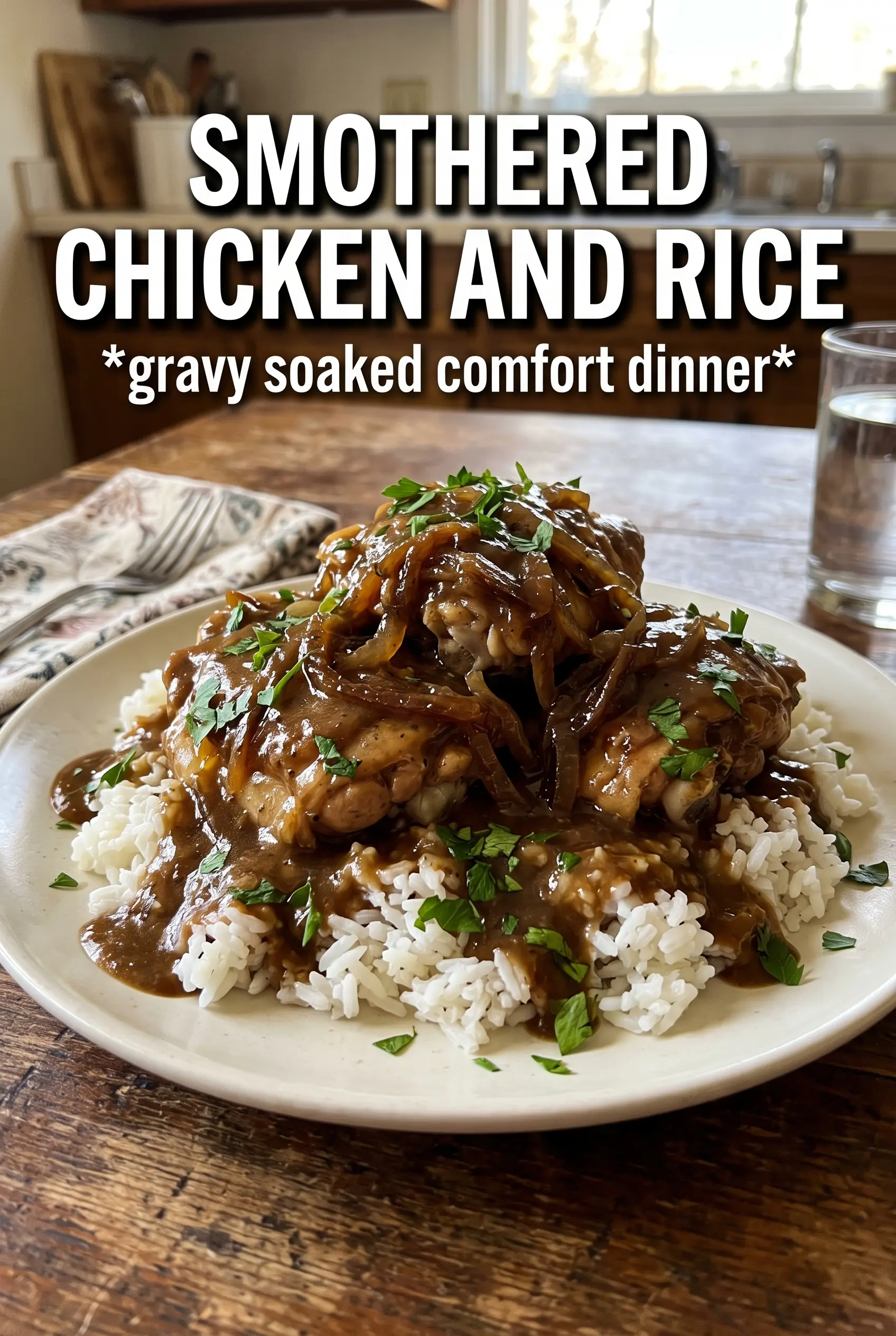
Fork-tender chicken over rice that’s soaked up a dark onion gravy is the kind of dinner that clears the pan fast. The chicken stays juicy because it sears first, then finishes gently on top of the rice instead of drying out in a hot oven. The rice underneath turns into the best part of the whole dish, carrying all the drippings, broth, and creamy gravy in every bite.
What makes this version work is the order. The thighs get a good sear for flavor, then the onions cook in the same pot until they soften and turn sweet. That browned bottom is what gives the gravy its depth, and the flour goes in with the onions before the broth so it can cook out its raw taste and thicken the sauce without clumping. The rice cooks right in that liquid, so nothing gets lost to a separate pot.
Below, I’ve included the detail that matters most for keeping the gravy smooth and the rice tender, plus a few smart swaps if you need to stretch the dish or adjust it for what’s already in your kitchen.
The rice came out fluffy underneath and the onion gravy thickened up exactly right. I used bone-in thighs like you suggested and the chicken stayed juicy all the way through.
Smothered Chicken and Rice with dark onion gravy is the kind of skillet dinner you’ll want to keep for busy nights.
The Reason the Rice Cooks Tender Instead of Mushy
The biggest mistake with smothered chicken and rice is adding too much liquid too early or stirring the rice after it starts simmering. Long-grain white rice needs just enough broth to hydrate and steam, not so much that it turns heavy and sticky. Once the pot is covered, the steam does most of the work, and lifting the lid keeps stealing heat and moisture from the pan.
The other detail that matters is the chicken placement. Nestling the thighs skin-side up keeps the skin from going leathery in the gravy, while the rice underneath gets protected from direct heat by the broth and chicken. If the chicken is too crowded or the liquid isn’t simmering before you cover it, you’ll get uneven rice and underdone spots in the center.
- Bone-in, skin-on thighs bring the best flavor and stay moist during the covered cook. Boneless thighs work in a pinch, but they cook faster and won’t season the rice as deeply.
- Long-grain white rice holds its shape better than short-grain rice or instant rice. Quick-cooking rice turns soft here, and brown rice needs a different liquid ratio and a much longer cook.
- Caramelized onions are what give the gravy its deep, savory base. Don’t rush them; pale onions make a thin sauce that tastes flat.
What the Chicken, Onion, and Cream Are Each Doing Here

- Chicken thighs are the backbone of the dish. The skin renders in the first sear, which gives you flavor in the pot and keeps the meat from drying out during the covered simmer. If you swap in chicken breasts, shorten the cook and expect a less rich result.
- Onion does more than add flavor; it becomes part of the gravy itself. Slice it thin so it softens before it browns too deeply, and give it the full time in the pot so it sweetens instead of staying sharp.
- Flour thickens the gravy after the onions cook. Let it toast for a full minute before the broth goes in, or the sauce can taste pasty instead of savory.
- Heavy cream rounds out the broth and gives the gravy a silky finish. Half-and-half works, but the sauce will be a little lighter and less plush.
- Worcestershire sauce adds the salty, umami depth that makes the gravy taste like it simmered all afternoon. You won’t taste it as a separate ingredient; you’ll just notice the sauce has more backbone.
Building the Gravy and Rice in One Pot
Getting the Sear Without Burning the Seasoning
Season the chicken well, then lay it skin-side down in hot oil and leave it alone until the skin turns deep golden and releases easily from the pot. If you try to flip too soon, the skin will stick and tear, and you’ll lose a lot of the flavor that should stay in the pan. The goal is color, not cooking the chicken through at this stage.
Cooking the Onions Into the Base
After the chicken comes out, the onions go into the same pot with all those browned bits underneath. Stir them often and let them soften all the way through until they pick up color and smell sweet, not raw. Garlic goes in at the end so it doesn’t scorch, because burnt garlic will make the whole gravy bitter.
Turning the Drippings Into Sauce
Sprinkle the flour over the onions and cook it for a minute so the raw taste disappears. When you add the broth, pour slowly and scrape the bottom as you go; that’s where the flavor lives. Stir in the cream and Worcestershire after the broth starts to smooth out, not before, or the sauce can look streaky and break.
Finishing the Rice Under the Chicken
Stir the uncooked rice into the gravy, then set the chicken back in skin-side up. Bring everything to a gentle simmer before covering, because cold liquid under a tight lid slows the rice and throws off the texture. Cook over low heat until the rice is tender and the liquid is absorbed; if it still looks soupy, give it a few extra minutes off the heat with the lid on so the steam can finish the job.
How to Adapt This for Different Kitchens and Different Nights
Dairy-Free Version
Swap the heavy cream for unsweetened full-fat coconut milk or a plain dairy-free cooking cream. The gravy won’t be quite as rich and classic, but it will still turn silky as long as you keep the heat low after the broth goes in.
Use Boneless Thighs for a Faster Cook
Boneless thighs shave a few minutes off the simmer and are easier to serve, but they won’t flavor the rice quite as deeply as bone-in pieces. Start checking early so they stay juicy; overcooked boneless chicken turns stringy fast in a covered pot.
Gluten-Free Adjustment
Use a gluten-free all-purpose flour blend that’s meant for thickening. The gravy should still thicken well, but if your blend is very starchy, whisk it into the onions thoroughly before adding broth so it doesn’t clump.
If You Want a Little More Veg
Stir in a handful of chopped mushrooms with the onions, or add peas at the end once the rice is done. Mushrooms deepen the gravy and peas add color without changing the cooking time, which keeps the rice from going soft.
Storage and Reheating
- Refrigerator: Store in an airtight container for up to 4 days. The rice will firm up as it chills, and the gravy will thicken.
- Freezer: It freezes well for up to 2 months, though the rice softens a bit after thawing. Freeze in portions with extra gravy if you can.
- Reheating: Warm covered on the stove over low heat or in the microwave with a splash of broth. High heat dries out the chicken and makes the rice turn gummy before the center is hot.
Answers to the Questions Worth Asking
Smothered Chicken and Rice
Ingredients
Equipment
Method
- Season chicken thighs all over with garlic powder, onion powder, smoked paprika, salt, and pepper (use a light, even coating). Heat vegetable oil in a large Dutch oven and sear chicken skin-side down over medium-high heat for 6-7 minutes until the skin is golden and releases easily (watch for a deep golden color at the edges).
- Flip the chicken and sear the second side for 4 minutes until browned, then remove to a plate (keep any rendered fat in the pot).
- Add sliced onion to the same Dutch oven and cook over medium heat for 8-10 minutes until caramelized and golden brown. Stir in minced garlic and cook for 1 minute until fragrant (no browning).
- Sprinkle all-purpose flour over the onions and stir for 1 minute to cook out the raw flour flavor (the mixture should look slightly thickened).
- Gradually add chicken broth while scraping up the browned bits from the bottom. Stir in heavy cream and Worcestershire sauce until smooth and glossy, then bring to a gentle simmer.
- Stir in uncooked long-grain white rice so it’s evenly coated in the onion gravy. Nestle the chicken thighs back into the Dutch oven skin-side up into the broth.
- Bring everything to a simmer, then cover tightly and cook over low heat for 20-22 minutes until the rice is cooked and the chicken reaches 165°F (the surface should be gently bubbling).
- Turn off the heat and garnish with fresh parsley. Serve hot with the chicken and rice with dark onion gravy over every surface.