Bubbly cream sauce, tender chicken, and a browned Parmesan top make these creamy baked chicken breasts the kind of dinner that disappears fast once it hits the table. The sauce turns thick and spoonable in the oven, pooling around the chicken and keeping every bite moist instead of dry or stringy. It’s the kind of straightforward, dependable dish that earns a permanent spot in the weeknight rotation.
What makes this version work is the balance in the sauce. Cream of chicken soup gives it body, sour cream brings tang and richness, and mayonnaise keeps the texture silky as it bakes. The ranch seasoning does more than add flavor; it seasons the whole dish from the inside out, so the chicken itself doesn’t taste bland under the cream.
Below, I’m walking through the one step that keeps the sauce smooth, the best way to tell when the chicken is actually done, and a few smart swaps if you need to stretch what you have on hand.
The sauce came out thick and creamy, and the Parmesan on top browned just enough without drying out the chicken. I served it over rice, and my husband asked if we could put it in the regular dinner rotation.
Save these creamy baked chicken breasts for the nights when you want a golden, bubbly dinner with almost no prep.
The One Thing That Keeps the Sauce Smooth Instead of Grainy
The biggest risk with a creamy chicken bake isn’t the chicken. It’s the sauce. If the dairy goes in cold and the dish gets blasted in the oven too hard, the top can tighten before the middle has a chance to stay silky, and that’s when you end up with a sauce that looks broken or oily around the edges.
This version avoids that by whisking everything into a fully smooth sauce before it ever touches the baking dish. Cream of chicken soup gives it structure, but the sour cream and mayonnaise need to be evenly blended so they bake as one sauce instead of separating into layers. The ranch seasoning and garlic powder dissolve into the mixture and season every bite without leaving little pockets of seasoning on top.
The other thing that matters is the chicken thickness. Thin breasts cook fast and stay tender. Thick ones need a little extra time, and if they’re wildly uneven, the thinner end will dry out before the center is done. A light pound to even them out pays off here.
What the Sauce Ingredients Are Doing in This Dish
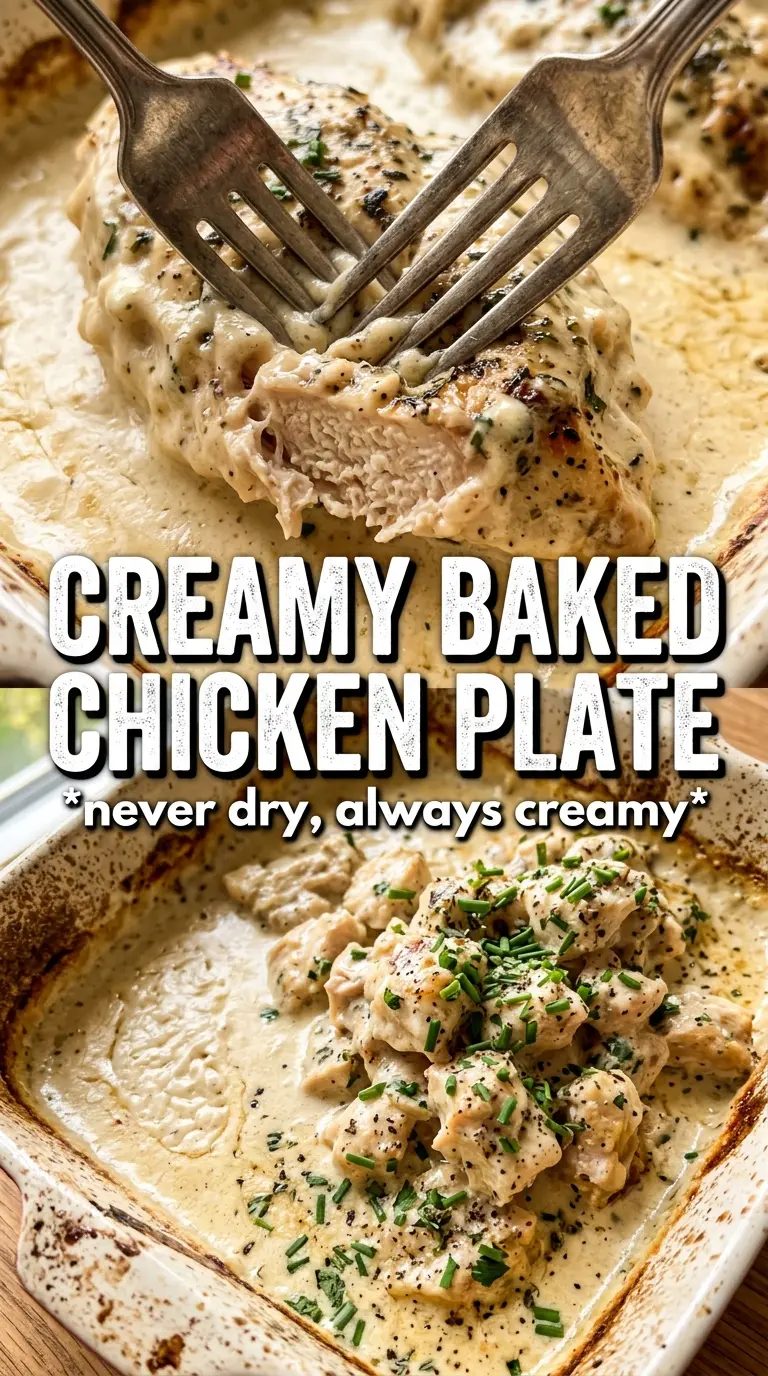
- Cream of chicken soup — This is the backbone of the sauce. It brings thickness and that familiar savory base that clings to the chicken. A homemade white sauce can work in another recipe, but it won’t give you the same short, dependable bake here.
- Sour cream — This adds tang and keeps the sauce from tasting flat or overly heavy. Full-fat sour cream is the best choice because it stays smooth in the oven. Light sour cream can work, but the sauce is a little more likely to look loose.
- Mayonnaise — Mayo sounds unusual until you taste the finished dish. It adds richness and helps the sauce stay glossy and thick. Don’t swap it for extra sour cream unless you want a sharper, less velvety sauce.
- Ranch seasoning mix — This is where most of the flavor comes from. It seasons the sauce evenly and gives the whole dish a familiar herb-and-garlic backbone. If you need to replace it, use a mix of dried dill, parsley, onion powder, garlic powder, and a little salt, but the flavor won’t be quite as rounded.
- Parmesan cheese — Parmesan browns on top and adds a salty finish that keeps the sauce from tasting one-note. Freshly grated Parmesan melts and browns better than the shelf-stable kind, which can sometimes stay sandy instead of turning golden.
Getting the Chicken Tender Before the Top Browns
Season and set up the dish
Preheat the oven to 375°F and grease the baking dish before you touch the chicken. Season both sides of the breasts well with salt, pepper, garlic powder, and onion powder so the meat itself tastes seasoned, not just the sauce. If the chicken breasts are very thick on one side, give them a few light taps with a meat mallet or the bottom of a heavy pan so they cook evenly. Uneven thickness is the fastest way to end up with dry edges and a raw center.
Build the sauce until it looks completely uniform
Whisk the cream of chicken soup, sour cream, mayonnaise, ranch seasoning, and garlic powder together until no streaks remain. It should look smooth, pale, and a little glossy. If you still see pockets of sour cream, keep whisking; those pockets can bake into uneven spots that look curdled on top. The sauce should pour easily but still feel thick enough to coat a spoon.
Bake until the center reaches 165°F
Pour the sauce over the chicken and spread it all the way to the edges of the dish, then scatter the Parmesan over the top. Bake until the sauce is bubbling around the sides and the cheese is deeply golden in spots, usually 28 to 32 minutes. The real test is the internal temperature at the thickest part of the chicken: 165°F. If you pull it too early, the center can be underdone; if you keep baking long after it hits temperature, the chicken starts to dry out even under all that sauce.
Rest long enough for the sauce to settle
Let the dish sit for a few minutes before serving. The sauce thickens slightly as it rests, and that short pause keeps it from running everywhere when you spoon it over rice or pasta. A little fresh parsley at the end gives the dish a clean finish and keeps the sauce from looking heavy on the plate.
How to Adjust This Bake Without Losing the Creamy Texture
Make it gluten-free
Use a gluten-free cream of chicken soup and a certified gluten-free ranch seasoning mix. The texture stays nearly the same, but this is one of those recipes where label-checking matters because both packaged ingredients can hide gluten.
Swap in chicken thighs
Boneless, skinless thighs work well if you want juicier meat and don’t mind a richer final dish. They can handle a little more baking time, and they stay tender even if you miss the exact minute, but the sauce will look slightly fattier because thighs release more liquid.
Make it lighter
You can use light sour cream and reduced-fat mayonnaise, but expect a thinner sauce and a less plush finish. The casserole still works, just with a little less richness and a softer top.
Add vegetables underneath
A layer of steamed broccoli, sautéed mushrooms, or wilted spinach under the chicken turns this into a full pan dinner. Keep the vegetables fairly dry before baking or the sauce will loosen and the bottom of the dish can turn watery.
Storage and Reheating
- Refrigerator: Store leftovers in an airtight container for up to 4 days. The sauce thickens as it chills, but it stays creamy.
- Freezer: It freezes, but the dairy sauce can separate a little after thawing. Freeze in a tightly sealed container for up to 2 months if you don’t mind a slightly less smooth texture.
- Reheating: Reheat covered in a 325°F oven until hot, or warm individual portions in the microwave at medium power. High heat is what dries the chicken out and makes the sauce look oily.
Questions I Get Asked About This Recipe
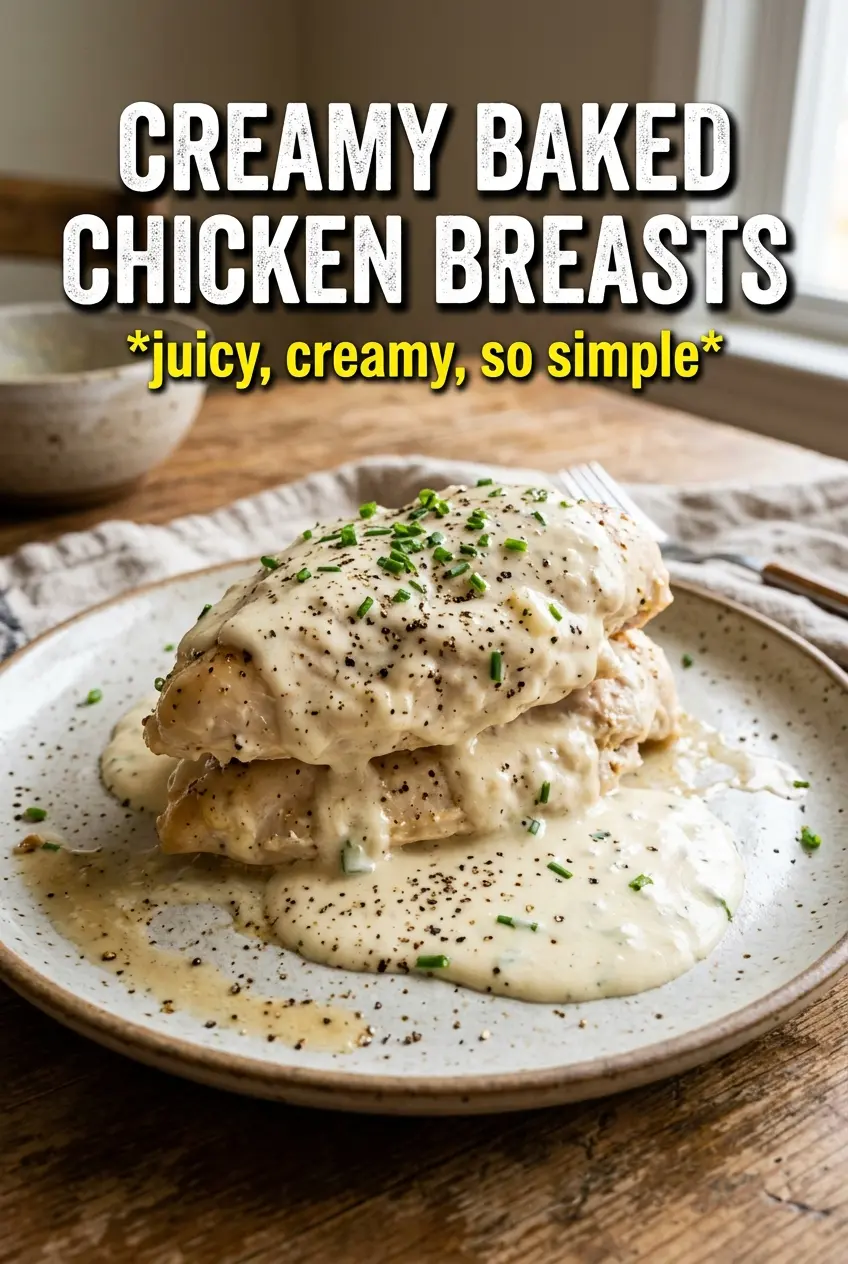
Creamy Baked Chicken Breasts
Ingredients
Equipment
Method
- Preheat the oven to 375°F and grease a 9x13 baking dish so the sauce won’t stick.
- Season the chicken breasts on both sides with salt, pepper, garlic powder, and onion powder, then place them in the prepared baking dish.
- Whisk together cream of chicken soup, sour cream, mayonnaise, ranch seasoning mix, and garlic powder until smooth.
- Pour the cream sauce evenly over the chicken so each breast is completely coated.
- Top the casserole with the Parmesan cheese so it can brown as it bakes.
- Bake at 375°F for 28–32 minutes, until the sauce is bubbly and golden and the internal temperature reaches 165°F.
- Garnish with fresh parsley and serve the creamy chicken over pasta or rice.