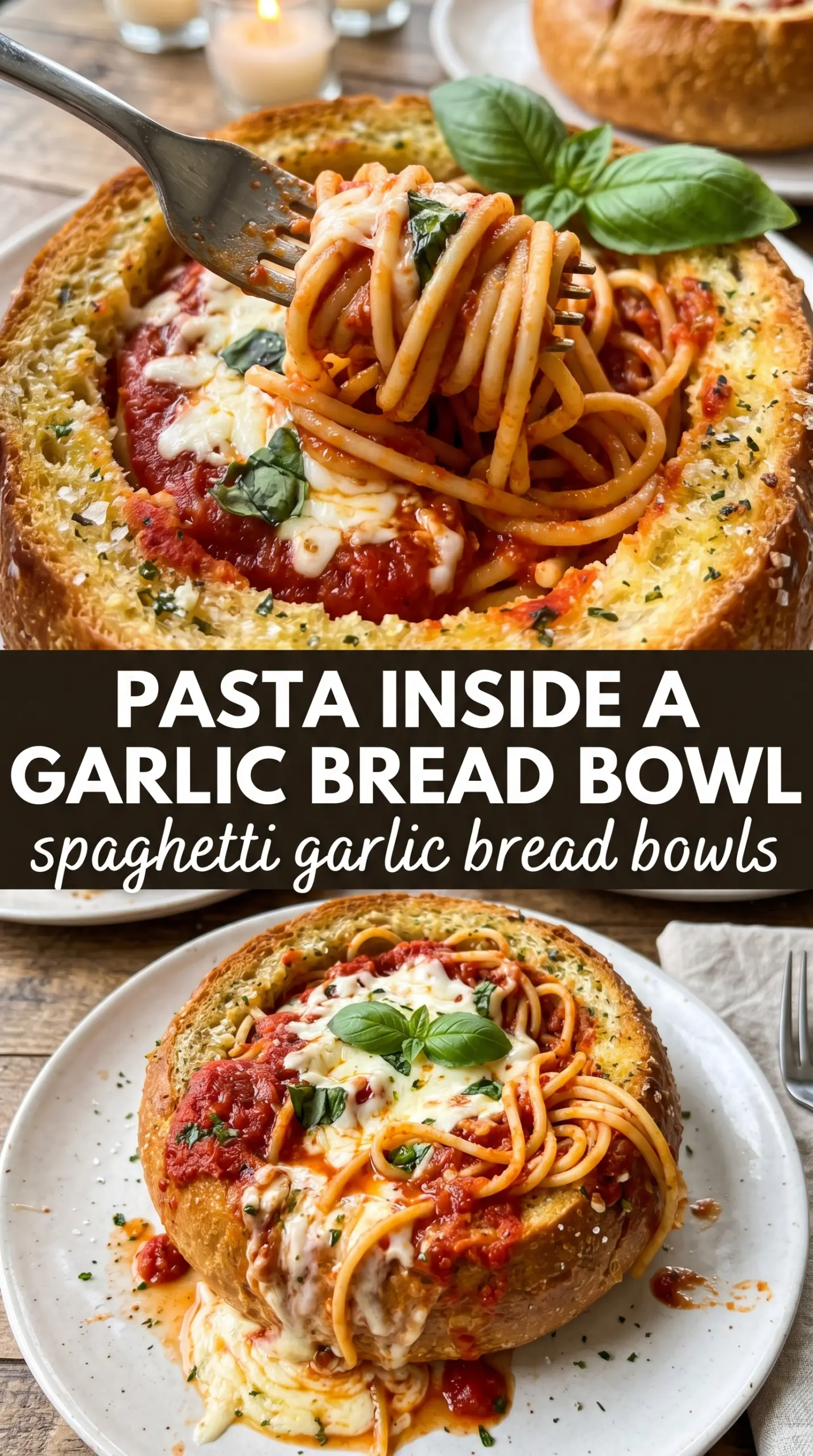
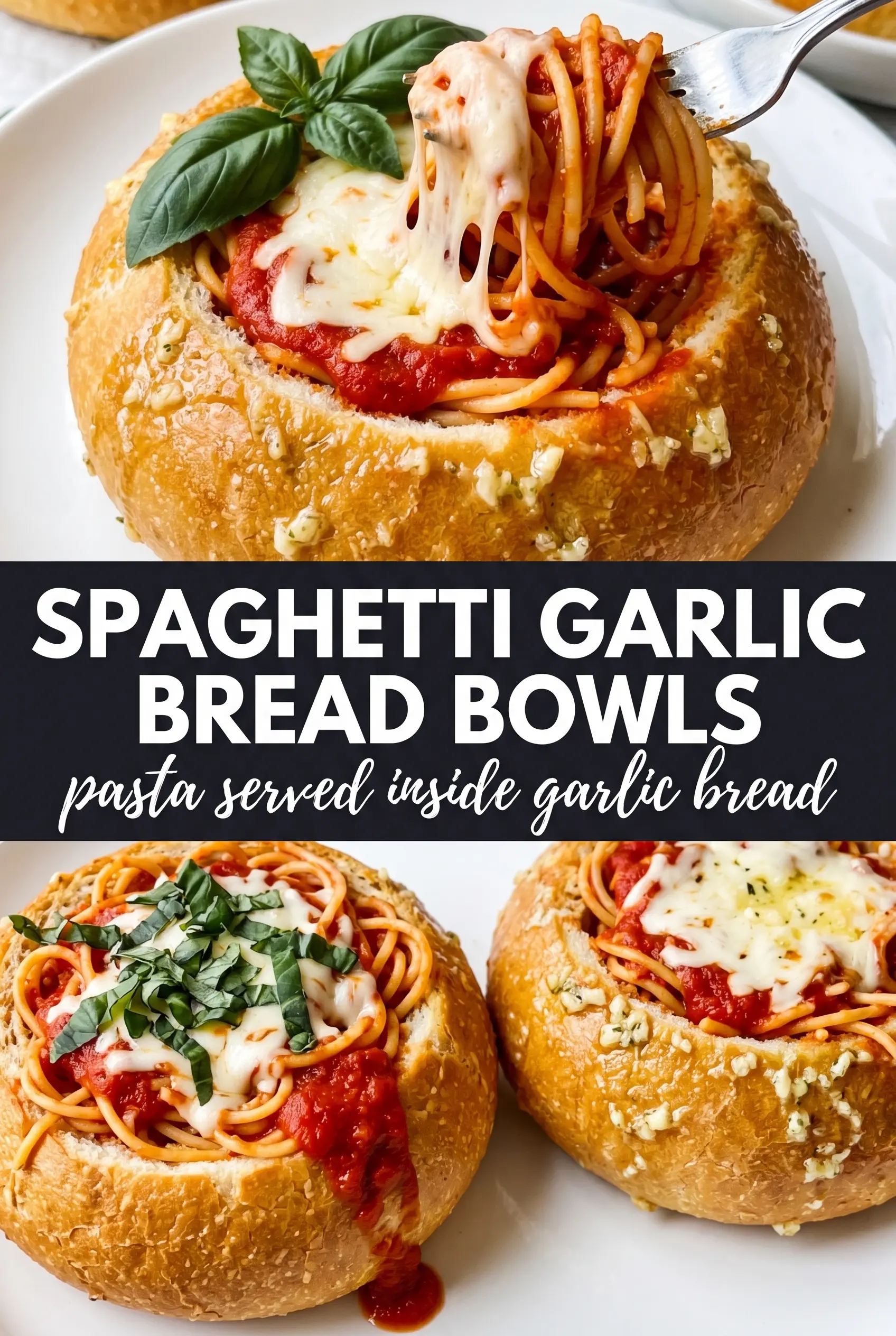
Spaghetti tucked into a crisp garlic bread bowl turns an ordinary pasta night into something people get excited about before it even hits the table. The bread gets toasted on the inside and out, the sauce stays saucy instead of soaking everything into a soggy mess, and the melted mozzarella gives the whole thing that irresistible pull when you break into it. It eats like comfort food with a built-in edible bowl, which is exactly why it disappears fast.
The key is giving the bread bowls a head start in the oven before they ever meet the spaghetti. That first bake sets the crust and keeps the interior from turning soft once the sauce goes in. I also like tossing the pasta with the meat sauce before filling the bowls, because it coats every strand and helps the filling hold together instead of sliding apart on the plate.
Below, I’ll walk through the part that matters most: how to hollow the bread without punching through the bottom, how to keep the bowls sturdy, and a few useful swaps if you want to change up the filling or make it fit what’s already in your kitchen.
The bread bowls held up beautifully and never got soggy, even with plenty of sauce. Browning the beef first and baking the garlic butter into the bread made all the difference.
Save these spaghetti garlic bread bowls for the night you want pasta, garlic bread, and a cheesy baked finish all in one meal.
The Trick to Keeping the Bread Bowl Crisp After the Sauce Goes In
The biggest mistake with bread bowl pasta is skipping the pre-bake or letting the hollowed-out bread sit too thin. A sturdy shell needs time in the oven before the filling goes in, and that inner border needs to stay thick enough to hold the sauce without collapsing. If you cut too aggressively, the bottom turns fragile and the whole thing leaks halfway through dinner.
Brushing the bread with garlic butter inside and out does more than add flavor. It helps seal the surface and gives the bread a head start on browning, which is what keeps the crumb from turning gummy once the spaghetti is added. You want the bowl to feel crisp around the edges and just a little tender in the center, not dried out all the way through.
- Round sourdough bread bowls — Sourdough gives you a sturdier crust than soft sandwich bread, and that matters here. If you swap in another round loaf, pick one with a firm outer shell so it can handle the filling.
- Butter, garlic, and parsley — This is the flavor base for the bowl itself. Fresh garlic tastes sharper and cleaner than garlic powder, and parsley keeps the butter from tasting flat. The butter also helps the bread toast instead of drying out.
- Ground beef and marinara — A meat sauce with some body holds better inside the bread than a thin, watery sauce. If your marinara is loose, simmer it a few extra minutes so it clings to the pasta instead of pooling at the bottom.
- Mozzarella — Low-moisture shredded mozzarella melts more predictably and gives you those stretchy browned spots on top. Fresh mozzarella looks pretty but can release too much liquid here.
What Each Ingredient Is Actually Doing in This Recipe
- Primary ingredient (the star) — Quality matters most. Choose the best you can find.
- Cooking medium (oil, butter, or broth) — This carries flavors and prevents dryness.
- Seasonings (salt, pepper, spices, herbs) — Layer flavors so nothing overpowers. Build depth gradually.
- Aromatics (garlic, onion, herbs) — Cook with fat to bloom flavors. Become the foundation.
- Supporting ingredients — Complement the main ingredient without overpowering it.
- Sauce or liquid (if applicable) — Brings flavors together. Balance richness with acid.
- Acid (lemon, vinegar, wine, or other) — Brightens and prevents flat-tasting results.
- Final finish (garnish, glaze, or sauce) — Prevents one-dimensional taste and adds visual appeal.
Building the Filling So It Stays Saucy, Not Soupy
Prepping the Bread Bowls
Slice the tops off the bread bowls and hollow them out, leaving about a 1-inch wall and a solid base. Pull out enough of the soft center to make space, but don’t dig so deep that the bottom starts to thin out. Brush the inside and outside with the garlic butter, then bake until the shells feel crisp and lightly golden. That first bake is what protects you from soggy bread later.
Making the Meat Sauce
Brown the beef in a skillet until no pink remains and the edges take on a little color. Drain the fat if there’s a lot in the pan, then stir in the marinara, Italian seasoning, and red pepper flakes. Let it simmer until it thickens slightly and tastes rounded, not sharp from the jar. If the sauce looks thin, keep cooking; watery sauce is the fastest way to wreck the bread bowl.
Filling and Melting the Cheese
Toss the cooked spaghetti with the meat sauce before spooning it into the bread bowls. This coats the pasta and keeps the filling from separating into dry noodles on top and sauce underneath. Pack it in generously, top with mozzarella, and bake until the cheese is melted and bubbly with a few golden spots. Serve right away with parmesan, while the bread is still crisp at the edges.
Three Ways to Make These Spaghetti Garlic Bread Bowls Fit Your Table
Swap the beef for Italian sausage
Use hot or mild Italian sausage in place of the ground beef for a richer, more seasoned filling. It adds more fat and more built-in spice, so you can cut back a little on the red pepper flakes if you want a milder result. The texture stays hearty and holds up just as well inside the bread.
Make it vegetarian without losing the baked-in comfort
Skip the beef and use a thick marinara with sautéed mushrooms, lentils, or a plant-based crumbled meat. The important part is keeping the filling dense enough that it doesn’t turn watery in the oven. Mushrooms add great savory flavor, but cook off their moisture first or the bread bowls won’t stay crisp.
Gluten-free version
Use gluten-free bread bowls and gluten-free spaghetti, then handle the bread gently because many GF loaves are more delicate once hollowed out. A sturdier crust helps, so bake the bowls until they feel dry and crisp before filling. The flavor stays the same, but the texture depends more on that first bake.
Extra cheesy, baked casserole style
Add a thin layer of mozzarella inside the bowl before the spaghetti goes in, then finish with another layer on top. That gives you more cheese pull and a little extra insurance against sauce soaking into the bread. It does make the filling richer and heavier, so serve the bowls hot from the oven.
Storage and Reheating
- Refrigerator: Store the filling separately from the bread bowls for up to 3 days. If assembled, the bread softens quickly.
- Freezer: Freeze the meat sauce and pasta mixture for up to 2 months. Don’t freeze the assembled bread bowls; the bread turns tough and then soggy after thawing.
- Reheating: Reheat the filling on the stove or in the microwave until hot, then refill freshly warmed bread bowls and bake briefly to re-crisp. If you reheat everything together too long, the bread goes soft before the cheese melts.
Answers to the Questions Worth Asking
Spaghetti Garlic Bread Bowls
Ingredients
Equipment
Method
- Preheat the oven to 375°F. This prepares a hot baking environment so the bread crisps right away.
- Cut the tops off each round sourdough bread bowl and hollow out the centers, leaving a 1-inch border. Keep the bowls intact so they can hold spaghetti and sauce.
- Mix the melted butter with the minced garlic and chopped parsley, then brush generously inside and outside each bread bowl. Make sure the butter coats the rim for golden, crispy edges.
- Bake the bread bowls for 10 minutes at 375°F until crispy. Watch for deep golden color on the outside and sturdy sides.
- Brown the ground beef in a skillet over medium-high heat, then drain excess fat. Cook until no pink remains.
- Add the marinara sauce, Italian seasoning, and red pepper flakes to the skillet, then simmer for 10 minutes. Stir occasionally until the sauce thickens slightly.
- Toss the cooked spaghetti with the meat sauce and fill each bread bowl generously. Pack them so the pasta sits high above the rim.
- Top each filled bowl with shredded mozzarella and bake for 8–10 minutes at 375°F until the cheese is melted and bubbly. Serve immediately with Parmesan.