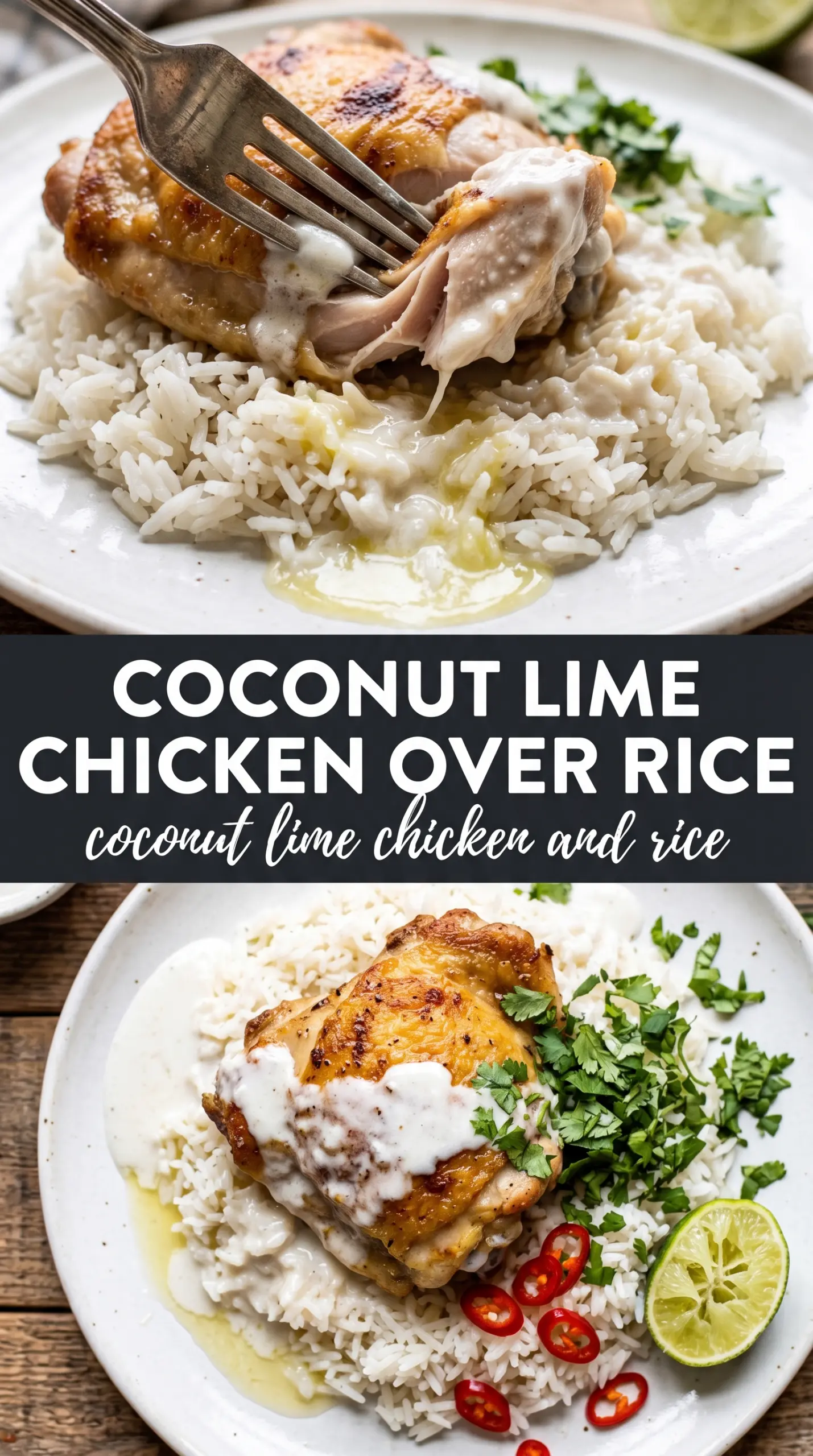
Tender chicken thighs tucked into coconut lime rice hit the plate with the kind of comfort that still feels bright. The rice turns fragrant and gently creamy, the chicken stays juicy, and the whole pan finishes with a little gloss from the coconut milk and broth reducing together. It’s the sort of one-pan dinner that looks like you worked harder than you did.
What makes this version work is the way the rice gets toasted in the pan before the liquid goes in. That extra minute or two deepens the flavor and helps the grains stay separate instead of turning soft and pasty. The chicken also sears first, which builds flavor in the pan and gives the thighs a better texture than poaching them straight in the coconut milk.
Below, I’ve included the timing cue that keeps the rice from going mushy, plus a few smart swaps if you need to use what’s already in the kitchen.
The rice came out fluffy instead of sticky, and the coconut-lime sauce thickened just enough to coat everything without turning heavy. My husband went back for seconds and asked if I could make it again next week.
Save this coconut lime chicken and rice for the nights when you want a one-pan dinner with creamy coconut rice, golden chicken thighs, and fresh lime at the finish.
The Trick to Keeping the Rice Creamy, Not Clumpy
The biggest mistake with coconut rice dishes is dumping everything together and expecting the grain to cook evenly. Rice needs a little head start in the pan so the outside can toast and absorb flavor before the liquid goes in. That’s what keeps this dish from tasting flat.
The other thing that matters is heat control once the chicken goes back in. A hard boil will push the coconut milk toward splitting and can make the rice cook unevenly on the bottom. A low simmer with the lid on gives you tender chicken thighs and rice that’s cooked through without turning gluey.
- Toasting the rice — This step gives the grains a drier, nuttier base and helps them hold their shape. Two minutes is enough; if the rice starts browning deeply, the pan is too hot.
- Coconut milk — Use full-fat coconut milk for the creamiest finish. Light coconut milk works in a pinch, but the sauce will be thinner and less rich.
- Chicken thighs — Thighs stay tender through the full simmer. Chicken breast can work, but it’s easier to overcook and it won’t give the same juicy result.
- Lime juice and zest — The zest carries the bright lime oil through the whole dish, while the juice sharpens the finish. Add both before simmering so the rice picks up the flavor instead of tasting like a plain coconut base with lime squeezed on top.
Building the Coconut Base in the Right Order
- Fish sauce or soy sauce — Either one adds salt and depth that plain salt can’t fully replace. Soy sauce keeps it pantry-friendly, while fish sauce gives a slightly rounder savory note; both disappear into the background once the lime and coconut come in.
- Ginger and garlic — Don’t rush this step. They need just a minute in the hot pan to lose their raw edge and perfume the oil, which carries flavor into the rice.
- Sugar — A small amount balances the acidity of the lime and keeps the coconut milk from tasting one-note. You don’t need more than a teaspoon unless your limes are especially sharp.
- Fresh cilantro — Add it at the end so it stays green and fragrant. Dried cilantro won’t give you the same clean finish here.
How to Finish the Pan Without Overcooking the Chicken
Getting the Sear First
Season the chicken thighs well and sear them in hot oil until they release easily and have a deep golden crust on both sides. If they stick, they’re not ready to turn yet. That browned layer does more than look good — it gives the finished rice a savory base that plain simmering can’t build.
Waking Up the Aromatics
Once the chicken is out, lower the heat a touch and cook the garlic and ginger just until fragrant. They should smell sharp and warm, not bitter. If the garlic browns too much, the whole dish picks up a harsh edge, so keep it moving and move on quickly to the rice.
Simmering the Rice and Chicken Together
After the liquid goes in, stir once to pull up the browned bits from the pan, then nestle the chicken back into the rice. Cover it and keep the heat low enough that the surface barely simmers. If you cook it too hard, the bottom can scorch before the rice is tender.
The Rest That Makes It Readable on the Fork
When the rice is tender and the chicken is cooked through, let the pan sit off the heat for five minutes before fluffing. That resting time lets the steam finish the grains and keeps them from breaking apart when you stir. Finish with cilantro and lime wedges so the dish stays bright right at the end.
How to Change This Dish Without Losing What Makes It Work
Make It Dairy-Free Without Changing a Thing
This recipe is already dairy-free as written, which is part of why it lands so well for a weeknight main. The coconut milk gives you the creamy texture without any cream or butter, and the finish stays light instead of heavy.
Swap the Chicken Thighs for Breast
Boneless chicken breast works, but cut it into large pieces and reduce the simmer time a little so it doesn’t dry out. You’ll lose some richness and juiciness, so keep an eye on the center and pull it as soon as it’s cooked through.
Use Brown Rice When You Have More Time
Brown rice needs more liquid and a much longer cook time, so this becomes a different dinner, not a straight swap. The flavor still works, but the chicken may overcook unless you sear it first and add it back near the end.
Storage and Reheating
- Refrigerator: Store leftovers in an airtight container for up to 4 days. The rice firms up a bit, but the flavor deepens overnight.
- Freezer: This freezes well for up to 2 months. Portion it into containers so the rice reheats evenly, and thaw it in the fridge before warming.
- Reheating: Reheat gently on the stove or in the microwave with a splash of water or broth. The most common mistake is blasting it over high heat, which dries out the chicken and makes the rice tough.
Questions I Get Asked About This Recipe
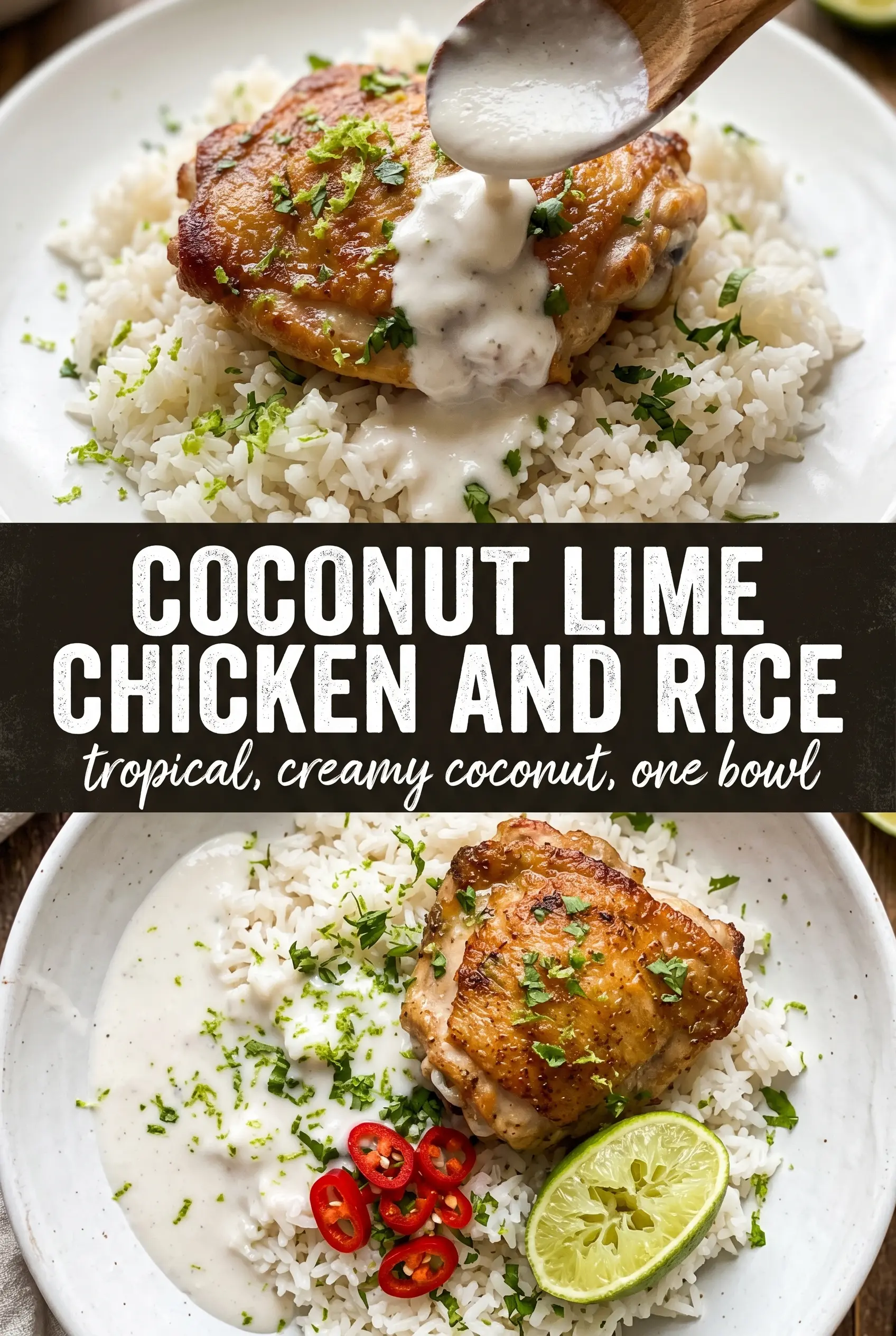
Coconut Lime Chicken and Rice
Ingredients
Equipment
Method
- Season the boneless chicken thighs with salt and black pepper to taste, then sear in oil in a large skillet over high heat for 4–5 minutes per side until golden; remove and set aside.
- In the same pan, sauté garlic cloves, minced and fresh ginger, grated for 1 minute, then add long-grain white rice and toast for 2 minutes.
- Add coconut milk, chicken broth, lime juice, lime zest, fish sauce or soy sauce, and sugar; stir and bring to a simmer.
- Nestle the boneless chicken thighs into the rice, reduce heat to low, cover, and cook for 18–20 minutes until the rice is tender and the chicken is cooked through.
- Rest the pot for 5 minutes, then fluff the rice gently so the thighs stay nestled.
- Serve garnished with fresh cilantro and lime wedges for serving.